Nigerian History of Corruption: The “Cement Armada” Scandal of 1975.

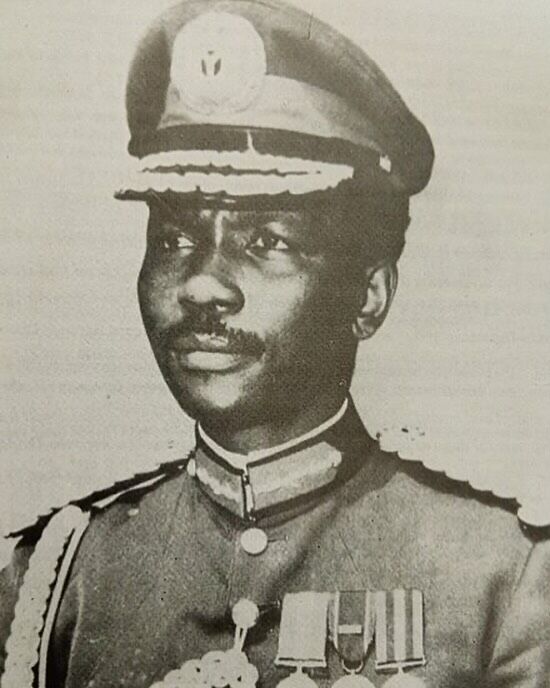
At the age of thirty-one, Gowon was selected to be the head of state in 1966.Gowon had up  until that point  only been a career  soldier, having had no political involvement at all. However, the events of the year suddenly forced him into a leadership position, as his unique background as a Northerner, devoid of both Islamic and Hausa ancestry, made him an especially safe choice to lead a  country where ethnic tension was roiling. When Gowon assumed leadership of the newly established Federal military government of Nigeria on August 1, 1966, he was a  Lieutenant Colonel. Nevertheless, Gowon found himself in an awkward position due to the presence of other senior military officers in the government, including Commodore Joseph Wey, Brigadier Babafemi Ogundipe, and Colonel Robert Adebayo. Prior to the commencement of hostilities in the civil war in 1967, Gowon elevated himself to Major-General, and then to full General  upon the conflict’s conclusion in 1970, in an effort to solidify his position as Head of State. During General Yakubu Gowon’s presidency, corruption peaked in the summer of 1975 with the infamous “cement armada” affair. This tragedy made the detrimental impacts of unbridled corruption and grave mismanagement within the Nigerian government clear. The main port of the nation, Lagos, was overrun by an extraordinary number of ships trying to offload cement, which sparked the  scandal. Unbelievably, representatives of the Nigerian government inked deals with 68 different  foreign vendors to provide an  astounding 20 million tons of cement in a single year. Lagos’s port could only handle roughly one million tons of cargo annually,  a long cry from this magnitude. The contracts had provisions for demurrage that greatly benefited the suppliers, but they were badly written. When a ship is delayed at the port—either while waiting to unload or even while awaiting authorization to leave their home ports—the importer is required to pay demurrage charges. The Nigerian government had to deal with rapidly rising expenses as the  number of ships increased, which were made worse by the fact that many of the ships were left idle for long stretches of time. The situation  worsened to the point where the port of Lagos could no longer handle basic supplies and commodities, thus paralyzing it. It was too late to turn things around by the time the authorities grasped the full scope of the catastrophe. Nigeria attempted to renounce the cement contracts and placed an emergency embargo on all incoming shipments in a last-ditch  effort to lessen the harm. But these actions resulted in lengthy legal disputes with foreign suppliers, drawing Nigeria into a  multiyear  legal battle. A notable legal consequence of the affair was a 1983 ruling by the United States  Supreme Court,  which brought to light  its extensive ramifications. The “cement armada” incident serves as a wake-up call regarding the perils of administrative ineptitude,  corruption, and the significance of doing due diligence while bidding on government contracts. Because the port’s congestion had a knock-on effect on Nigeria’s general trade and development during that time, it also serves  as  an example of the wider effects of bad governance on the country’s infrastructure and economy. 
Major General Ibrahim Babangida Addresses the Nation After Overthrowing General Muhammadu Buhari in the 1985 Coup

Nigeria was ruled by Major General Ibrahim Babangida in 1985 following the successful overthrow of General Muhammadu Buhari. Nigeria was on the verge of a new era in the turbulent year 1985. As Major General Ibrahim Babangida  got ready to address the  country and the world, the echoes of a military coup that had toppled General Muhammadu Buhari continued to reverberate. Babangida realized that the eyes of the country and the whole community were on him now that he carried the responsibility of  leadership. A new 28-member ruling council, which would take the place of the defunct Military Council of the overthrown Buhari, was sworn  in  by Babangida in a solemn ceremony. Numerous faces in the room were recognizable; these were former  members of the  previous  administration, now entrusted with leading Nigeria through these uncertain times. To maintain stability in the military structure, senior leaders such as Defense Minister Domkat Bali, Air Force Chief Ibrahim Alfa, Navy Commander Augustus Aikhomu, and Police Chief Etim Inyang were reappointed. Major-General Sani Abacha, a pivotal  player in  the coup that had overthrown the civilian government only two years before, was one of them. Now, Abacha took over the influential post of Chief of Army Staff, which Babangida had previously occupied. Additionally, the prominent post of Chief of Staff at Supreme Headquarters had been eliminated by the incoming leader in earlier  administrations. During the coup, Major-General Tunde Idiagbon, the person who had held the position,  was stuck in Saudi  Arabia  while on a religious pilgrimage, signifying the profound reforms Babangida was implementing to the nation’s government. Babangida took quick action to bring things back to normal despite the uncertainty. The curfew that had made  Lagos and other  state capital’ streets gloomy was lifted. Airports and seaports that had been quiet during the shutdown began to humm. The country’s land  borders, which had been blocked for more than a year, remained sealed even after communications were resumed.

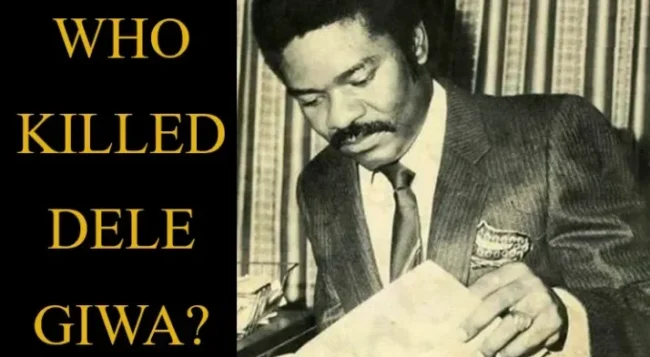
“Theory Suggested that Giwa Attempted to Blackmail Babangida, Leading to his Assassination.” More Insights into the Death of Dele Giwa

Augustus Aikhomu led a news conference that was organized by the Nigerian government on October 20, the day after an explosion occurred. Foreign reporters and photographers were not permitted to attend the press conference, and all questions were to be  directed “off the record” during the briefing. Ismaila Gwarzo of the SSS and Haliru Akilu talked about their recent dealings with  Dele  Giwa at the briefing. They talked about Akilu’s visit to Giwa’s house just before the bombing and an SSS interrogation over  accusations of gun running. The circumstances surrounding Giwa’s death raised questions, especially in light of Kayode Soyinka’s testimony—she was present  during the explosion but escaped unharmed. There was a lot of government meddling in spite of multiple investigations, including  one by Abubakar Tsav and another by Chris Omeben of the FIIB, which made it challenging to adequately look into important  individuals like Akilu and Tunde Togun. Later, Tsav stated that his inquiry was hindered and that there was proof of a conspiracy between Akilu and Togun; nonetheless,  these findings went unacted upon. There were conspiracy theories that surfaced, one of which claimed that Giwa was  assassinated  because he had discovered evidence connecting accused drug mule Gloria Okon to prominent figures, including General Ibrahim  Babangida’s wife. According to this version, Giwa tried to blackmail Babangida, which resulted in his murder. Nevertheless, Giwa’s  coworkers at  *Newswatch* magazine denied that Giwa and Gloria Okon were connected in any way. Gani Fawehinmi, Giwa’s attorney, tried in  vain to have those guilty brought to justice, and court decisions frequently went in favor of the accused, including senior security  personnel. General Babangida declined to provide testimony in 2001 in front  of a national human rights panel  despite the  controversy. Even though the lawsuit is still open, Giwa’s influence is acknowledged—an Abuja street bears his name.  

Story of Oba Ovonramwen Nogbaisi and His Exile to Calabar

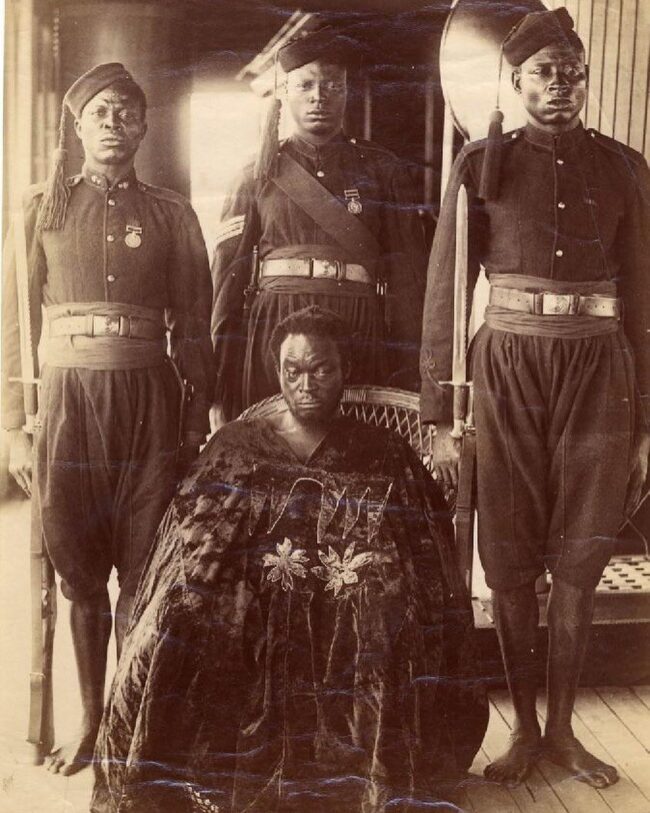
Adóló’s son, Oba Ovonramwen Nogbaisi, was living in exile in Calabar, surrounded by members of his kingdom who worked for the  British administration while he was away. Ovonramwen will always be remembered as a hero  in the Benin Kingdom’s  history  because of his valor and bravery. James Robert Phillips, the Niger Coast Protectorate’s deputy commissioner  and consul, attempted to see Ovonramwen, the Oba of Benin, in Benin City in November 1896. The visit was intended to discuss a trade arrangement that the Oba was purportedly not honoring that he had previously established with the British. Phillips made a formal request to his superiors in London for approval to carry out the visit. But Phillips went to Benin City at the end of December 1896 without waiting for an official reply. A British mission left  the Oil  Rivers  Protectorate in January 1897 with the express purpose of holding talks with the Oba. The Benin authorities, on the other hand,  believed that the true goal was to remove the Oba from office and saw this as a direct threat to his sovereignty. The Oba’s generals  decided to launch an assault on the delegation as it got closer to Benin City. With only two survivors, the ambush claimed the lives of almost every member of the expedition, including eight British officers and hundreds of African laborers and porters. Admiral Sir Harry Rawson led a punitive expedition that the British mounted against the Kingdom of Benin in 1897 as payback. The expedition’s final acts were the ruthless demolition of Benin City, the theft of the renowned Benin Bronzes, and the methodical  demolishing of the city’s strong defenses. Oba Ovonramwen was to be executed by  the British, but he escaped  into the nearby  woodlands. On August 5, 1897, Ovonramwen finally made his way back to Benin City to  publicly surrender  after fleeing for  several  months. Upon his return to the city, he was resplendently attired, bedecked  with coral beads, and surrounded  by between seven  hundred and eight hundred followers. Desperate to escape banishment, Ovonramwen offered Consul General Ralph Moor 200 barrels of oil, worth £1,500, on the condition that he reveal the whereabouts of his 500 ivory tusks, which at the time were estimated to be worth over £2 million. This offer was  turned down, though, because Moor had already found the ivory. Historian Sven Lindqvist  describes this  sequence of events in his  book *Exterminate All the Brutes* as a British invasion. According to Lindqvist, Phillips’s expedition was a clandestine operation meant to make it easier for Oba Ovonramwen to be  overthrown rather than a diplomatic effort. Lindqvist claimed that the British army  disguising their troops  as bearers and their weapons as  luggage. Despite numerous cautions from the Oba’s messengers not to infringe Benin’s territorial sovereignty, Phillips allegedly attempted to  approach the Oba’s palace under the guise of talks.…