
Course 1: Introduction to First Aid & Emergency Response
Estimated Reading Time: 20–25 minutes
Difficulty: Beginner
Mandatory for All Aron Helps Workers
Introduction
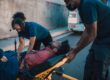
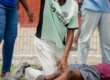
Emergencies can happen at any time and in any place. A child may choke while eating, an elderly person may fall, a colleague may collapse, or someone may suffer a burn while cooking.
As an Aron Helps worker, you may be the first person present when an emergency occurs. Your actions during the first few minutes can help protect someone’s life until professional medical assistance arrives.
First aid does not replace medical treatment. Its purpose is to preserve life, prevent the condition from worsening, and promote recovery while waiting for trained healthcare professionals.
This course introduces the basic principles of first aid and teaches you how to respond safely and confidently.
Learning Objectives
By the end of this course, you should be able to:
- Understand what first aid is.
- Recognise an emergency.
- Protect yourself before helping others.
- Follow the basic emergency response steps.
- Know when and how to call for help.
- Understand the importance of a first aid kit.
- Prevent the spread of infection.
Lesson 1: What is First Aid?
First aid is the immediate care given to a person who is injured or suddenly becomes ill before professional medical help arrives.
The aims of first aid are to:
- Preserve life.
- Prevent the condition from getting worse.
- Promote recovery.
- Provide reassurance until emergency services arrive.
You are not expected to diagnose illnesses or replace doctors. Your role is to provide safe initial assistance.
Lesson 2: The Responsibilities of a First Aider
A responsible first aider should:
✔ Stay calm.
✔ Assess the situation.
✔ Protect themselves from danger.
✔ Call for help.
✔ Comfort the injured person.
✔ Stay with the person until help arrives (if safe to do so).
Never do anything you have not been trained to do.
Lesson 3: Ensure the Scene is Safe
Before helping anyone, ask yourself:
“Is it safe for me to help?”
Look for dangers such as:
- Fire
- Smoke
- Electrical wires
- Gas leaks
- Broken glass
- Moving vehicles
- Aggressive animals
- Violent individuals
- Floodwater
If the area is unsafe, do not enter. Call the emergency services immediately and wait for trained responders.
Remember:
A second casualty helps no one.
Lesson 4: The DRSABC Emergency Approach
A simple way to remember the first aid sequence is DRSABC.
D – Danger
Check that the area is safe for you, the injured person, and others.
R – Response
Try to find out if the person is conscious.
Speak clearly:
“Hello, can you hear me?”
Gently tap their shoulder (avoid shaking infants).
If they respond, keep them comfortable and assess what happened.
If there is no response, continue to the next step.
S – Send for Help
Call emergency medical services immediately or ask someone nearby to call.
If you are alone with a seriously ill or injured person, call as soon as it is safe to do so.
Be ready to provide:
- Your name.
- The exact location.
- What happened.
- The person’s condition.
- Your phone number.
Remain on the line unless instructed to hang up.
A – Airway
If the person is unresponsive, carefully check whether their airway is clear.
If you can see something obvious in the mouth that can be removed safely, remove it carefully.
Do not blindly sweep your fingers into the mouth, as this can push an obstruction deeper.
B – Breathing
Look for normal breathing by:
- Watching the chest rise and fall.
- Listening for breathing sounds.
- Feeling for air on your cheek.
Take no more than 10 seconds to check.
If the person is breathing normally but remains unconscious, place them in the recovery position (if there is no suspected spinal injury) and continue monitoring them.
If they are not breathing normally, begin CPR if you are trained and it is safe to do so.
C – CPR
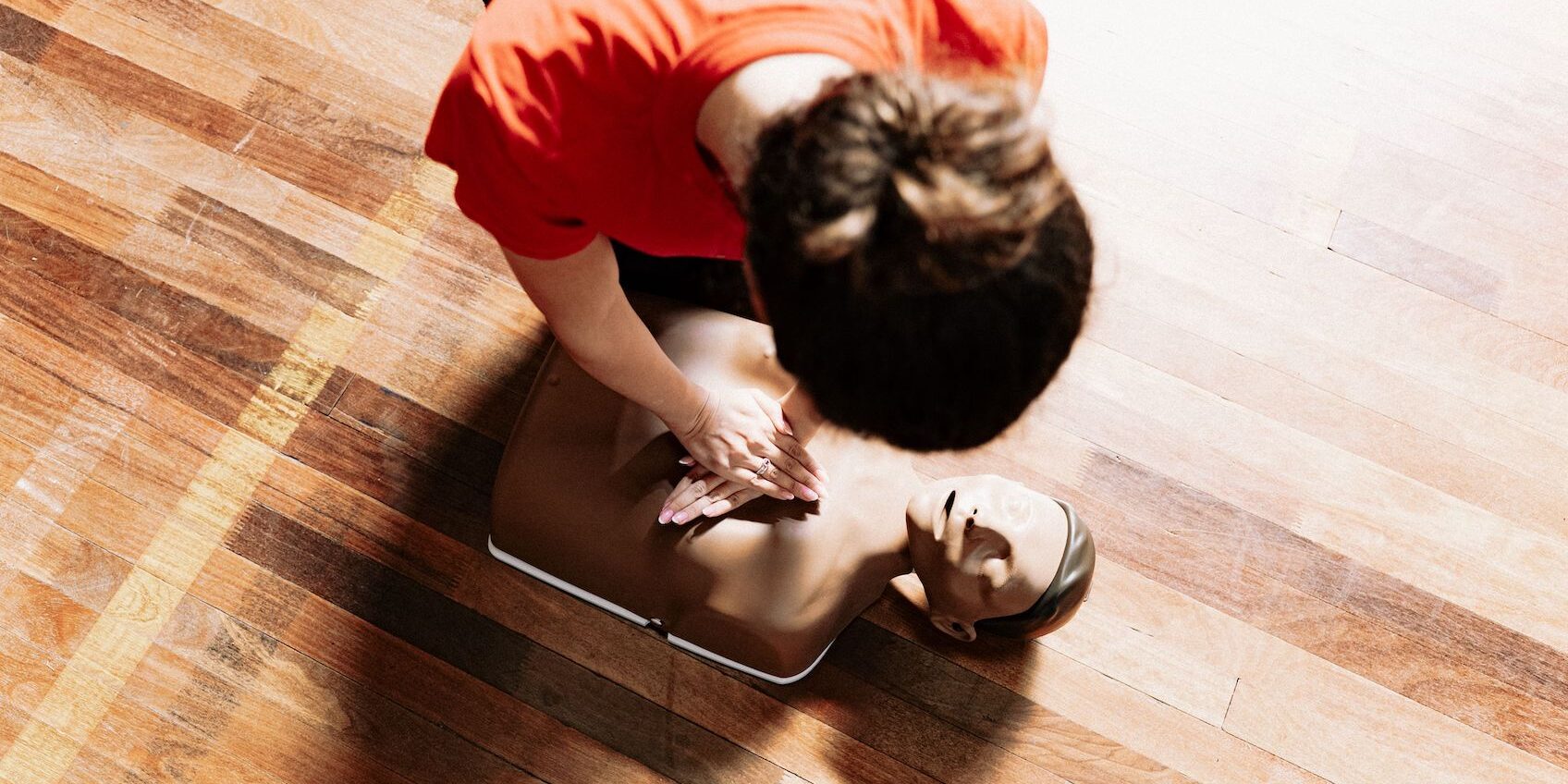
CPR (Cardiopulmonary Resuscitation) helps keep blood flowing to vital organs when the heart has stopped.
In the next course, you will learn:
- Adult CPR.
- Child CPR.
- Infant CPR.
- Hands-only CPR.
- Recovery position.
- AED awareness.
Lesson 5: Calling Emergency Services
Call emergency services immediately if someone:
- Is unconscious.
- Is not breathing normally.
- Has severe bleeding.
- Has chest pain.
- Has signs of a stroke.
- Has a seizure lasting longer than five minutes.
- Has suffered a serious head injury.
- Has severe burns.
- Is choking and cannot breathe.
Stay calm and answer the operator’s questions clearly.
Lesson 6: Infection Prevention
Protect yourself and the injured person.
If available:
✔ Wear disposable gloves.
✔ Wash your hands before and after providing care.
✔ Cover any cuts on your hands.
✔ Avoid direct contact with blood or bodily fluids.
If gloves are unavailable:
- Use a clean plastic bag or another barrier if possible.
- Wash your hands thoroughly afterwards.
Lesson 7: The First Aid Kit
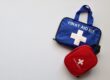
Every home and workplace should have a well-stocked first aid kit.
A basic kit should include:
- Disposable gloves
- Sterile gauze
- Adhesive plasters (bandages)
- Crepe bandage
- Triangular bandage
- Antiseptic wipes
- Adhesive tape
- Scissors
- Tweezers
- Safety pins
- Digital thermometer
- Burn dressing or sterile non-stick dressing
- CPR face shield (if available)
- Emergency contact list
- Notepad and pen
Check expiry dates regularly and replace used items promptly.
Lesson 8: When NOT to Move an Injured Person
Avoid moving someone if you suspect:
- Neck injury.
- Back injury.
- Spinal injury.
- Broken hip.
- Serious fractures.
Only move them if there is immediate danger, such as a fire or collapsing building.
Improper movement can worsen injuries.
Lesson 9: Keeping the Person Calm
A frightened person may become more distressed.
Speak calmly.
Introduce yourself.
Explain what you are doing.
Example:
“My name is Ada. I’ve called for help. Stay as still as you can. I’m going to stay with you until the ambulance arrives.”
Your reassurance can reduce fear and panic.
Lesson 10: Incident Reporting
After the emergency:
Record:
- Date.
- Time.
- Location.
- What happened.
- Care provided.
- Who was informed.
- Time emergency services arrived.
Keep reports factual.
Do not include guesses or personal opinions.
Real-Life Scenario
Ngozi is working as a nanny.
The child’s grandmother suddenly feels dizzy and collapses.
Ngozi checks that the room is safe, speaks to the grandmother, and receives no response.
She asks another adult to call emergency services while she checks for normal breathing.
The grandmother is breathing but unconscious.
Ngozi places her in the recovery position, stays with her, and monitors her breathing until the ambulance arrives.
By remaining calm and following the correct steps, Ngozi provides appropriate first aid while waiting for professional medical care.
Daily Emergency Readiness Checklist
Before Starting Work:
✅ Know the address of your workplace.
✅ Save emergency contact numbers.
✅ Locate the first aid kit.
✅ Know the nearest exit.
✅ Check your mobile phone is charged.
During Work:
✅ Report hazards.
✅ Keep walkways clear.
✅ Monitor children or vulnerable adults carefully.
After Any Incident:
✅ Inform your employer.
✅ Complete an incident report.
✅ Restock the first aid kit if supplies were used.
Common Mistakes Beginners Make
❌ Panicking.
❌ Forgetting to call emergency services.
❌ Putting themselves in danger.
❌ Moving someone with a possible spinal injury.
❌ Giving food or drink to an unconscious person.
❌ Leaving an injured person alone.
❌ Guessing instead of observing.
Summary
First aid begins with staying calm, protecting yourself, and assessing the situation safely. By following the DRSABC approach and knowing when to call for help, you can provide valuable assistance while waiting for emergency services.
Remember:
Your first responsibility is to keep yourself safe so you can safely help others.
Knowledge Check
1. The first priority before helping someone is to:
A. Run to the person immediately.
B. Check that the area is safe.
C. Move the injured person.
D. Give them water.
Answer: B
2. What does the “D” in DRSABC stand for?
A. Doctor
B. Danger
C. Dressing
D. Diagnosis
Answer: B
3. If a person is unconscious but breathing normally, you should:
A. Give them food.
B. Leave them alone.
C. Place them in the recovery position if appropriate and monitor them.
D. Shake them awake.
Answer: C
4. Why should you wear gloves during first aid when available?
A. To keep your hands warm.
B. To help prevent the spread of infection.
C. To improve your grip.
D. It is only for doctors.
Answer: B
5. Good incident reports should be:
A. Based on opinions.
B. Accurate, factual, and completed as soon as practical.
C. Written several days later.
D. Shared on social media.
Answer: B
Practical Assignment
You are working as a housekeeper when you hear a loud crash in the living room.
You find your employer lying on the floor. They are unconscious but breathing.
Write down the steps you would take from the moment you discover the person until emergency medical services arrive.
Include:
- How you would check for danger.
- How you would assess responsiveness.
- When you would call for help.
- How you would monitor the person’s condition.
- What information you would report to emergency responders.
Congratulations!
You have completed Basic First Aid & CPR – Course 1: Introduction to First Aid & Emergency Response.
In Course 2, you will learn life-saving skills including:
- Adult CPR.
- Child CPR.
- Infant CPR.
- The recovery position.
- How to help a choking adult, child, and baby.
- Introduction to Automated External Defibrillators (AEDs).
Recommended YouTube Videos
1. St John Ambulance – First Aid Basics
https://www.youtube.com/@stjohnambulance
2. British Red Cross – First Aid for Everyone
https://www.youtube.com/results?search_query=British+Red+Cross+first+aid+basics
3. American Red Cross – First Aid Training
https://www.youtube.com/@americanredcross
4. Resuscitation Council UK – Emergency Response
https://www.youtube.com/results?search_query=Resuscitation+Council+UK+basic+life+support
5. World Health Organization – Emergency Care
https://www.youtube.com/results?search_query=World+Health+Organization+emergency+care
Aron Helps Professional Tip
Every second counts in an emergency. You do not need to be a doctor to make a difference. Staying calm, calling for help quickly, protecting yourself, and providing appropriate first aid can significantly improve a person’s chances of recovery while waiting for professional medical assistance.