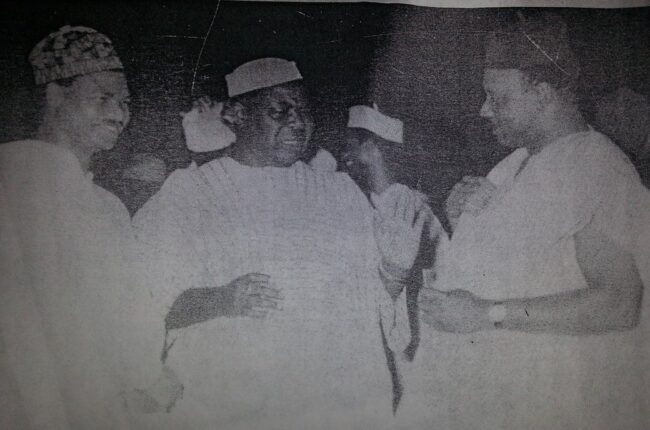
Details of the Death of Brigadier Zakariya Maimalari Few Days After his Wedding Ceremony

Pictured from left to right are Brigadier Zakariya Maimalari, Chief Festus Okotie-Eboh, and General  Aguiyi Ironsi at a party he threw in  Lagos. Little did they realize, however, that the coup of January 15, 1966, was still going on. This photo was taken in 1966, and hours later, he and Okotie-Eboh were assassinated. When Maimalari was celebrating his recent marriage the day before the coup on January 15, 1966, he had no idea that among the  guests were rebel leaders who would later come back to haunt him.He fled through the back of his house on the day of the coup as  soon as rebel soldiers invaded it. He first fled into a small room inside the complex before emerging onto the main road. He saw a car on the road and thought it was headed to Ikeja, but it turned out to be a rebel vehicle, and he was taken prisoner and subsequently executed.
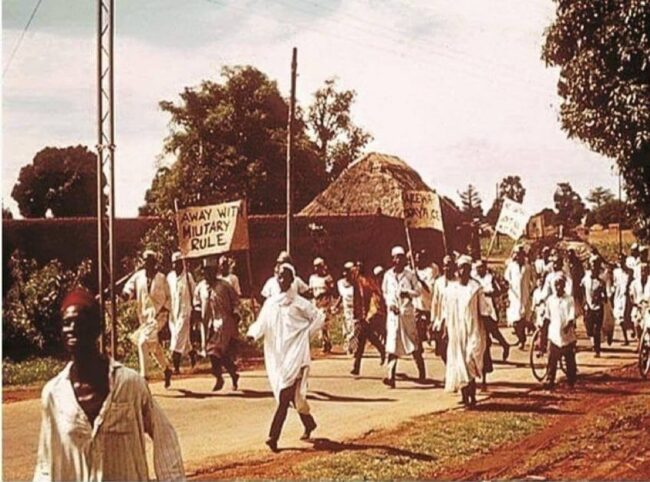
Details of the Zaria Protest Kicking Against Military Rule in 1966

Zaria saw a protest in 1966 against the January coup that led to the ruthless killings of Kur Mohammed, Ahmadu Bello,  Tafawa Balewa, and Zakariya Maimalari, among others.   A coup that occurred in Nigeria in 1966 had a significant effect on the country’s political climate. A coup d’état led by a gang of  youthful army officers on January 15, 1966, culminated in the assassinations of numerous prominent political personalities, including Ahmadu Bello, Zakariya Maimalari, Kur Mohammed, and Prime Minister Tafawa Balewa. The First Republic of Nigeria came to an end with this coup, and Major General Johnson Aguiyi-Ironsi took over as president of state. The Nigerian Civil War was ultimately caused by the political unrest that followed the events of 1966.

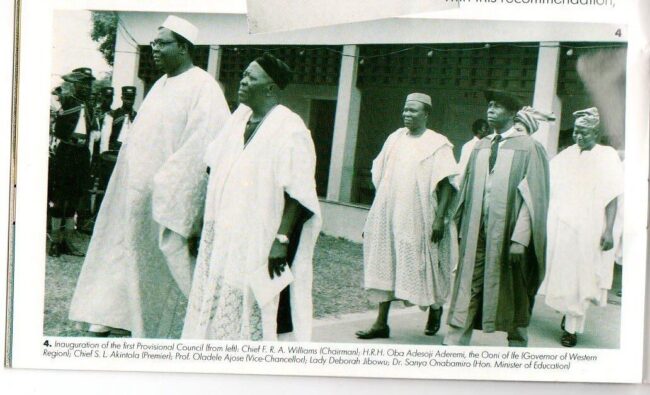
An Image From the Inauguration of the First Provisional Council of the University of Ifé

The entry of the Icons: In 1961, the University of Ifé held its first Provisional Council’s inauguration. The lone female member of the Council, Lady Deborah Jibowu, is pictured with Chief F.R.A. Williams, Ooni Oba Adesoji Aderemi,  Premier S.L. Akintola, Prof. Oladele Ajose, Vice-Chancellor, and Minister of Education, Dr. Sanya Onabamiro.

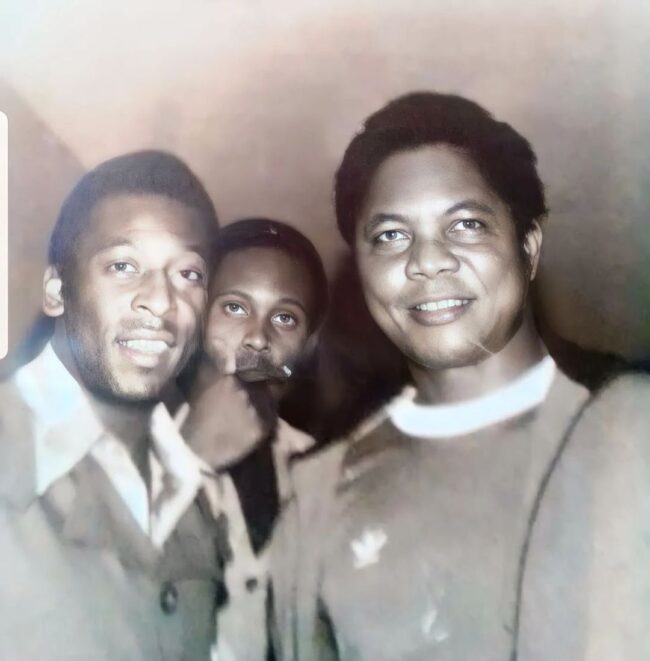
An Image of Nugerian Football Icons Pelé (left) and Daniel Anyiam,

From 1954 to 1956 and again from 1964 to 1965, Nigerian football player and coach Daniel Amobi Amadi Anyiam (November 26,  1926 – July 6, 1977) led the national team. He was a player and the first captain of the national team in 1949 before beginning his coaching career. After the Nigerian Civil War, he served as a national team selector and the first coach of the Enugu Rangers.

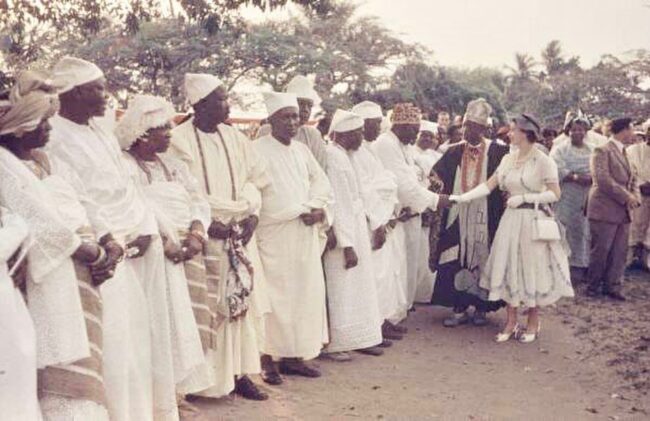
Idejo chiefs of Oba Adeniji Adele II Meets Queen Elizabeth II in Lagos 1956

Lagos Island’s “IDEJO” (white cap chiefs): Olofin Atekoye, the man who established Isale Eko (Lagos) and initially  made his  home  on Iddo Island, is the father of the Idejo White Cap Chiefs of Lagos. Following the demise of this fabled individual, currently recognized as the progenitor of the land-owning chiefs of  Lagos, his progeny  scattered around the city, consolidating their dominance. They would congregate for nine days in a row in Iga Idunganran, the Lagos oba’s palace, for state sessions from these locales. They conducted prayer rituals, talked about important matters, shared meals with extended family members and friends, feasted, anddanced to the sounds of the Gbedu and Igbe drums during these get-togethers. According to Lagos folklore, Idejo chiefs are descended from Olofin and were the first landowners on the island of Lagos.Certain  Idejo nobility members, like the Elegushi, have had their rank increased to that of an Oba. Olumegbon, Aromire, Oloto, Oluwa, Oniru, Onisowo, Onitolo, Elegushi, Ojoro, and Onikoyi were among Olofin’s thirty-two offspring. Idejo chiefs can be identified by their regal attire, which includes a white cap and fan. Some chiefs found homes closer to Lagos Island and the Oba’s palace due to the distances and mishaps they experienced on their way there. They were given support by the Lagos State Government to return to their various  domains and establish  themselves  as first-class monarchs during the late Oba Adeyinka Ayinde Oyekan’s reign. Title of Ojora: Formerly: Chief Ojora of Lagos Now: Oba Ojora of Ijora and Iganmu Kingdom, Coker Aguda Local Council Development Area Current Occupant: Oba Abdul Fatai Oyeyinka Aremu Aromire, Oyegbemi II Title of Oniru:…

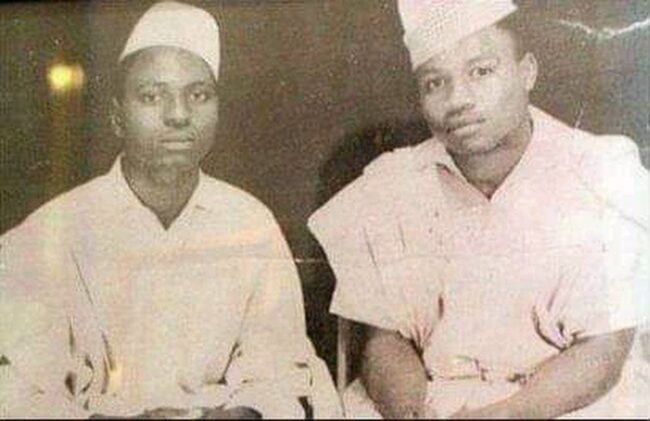
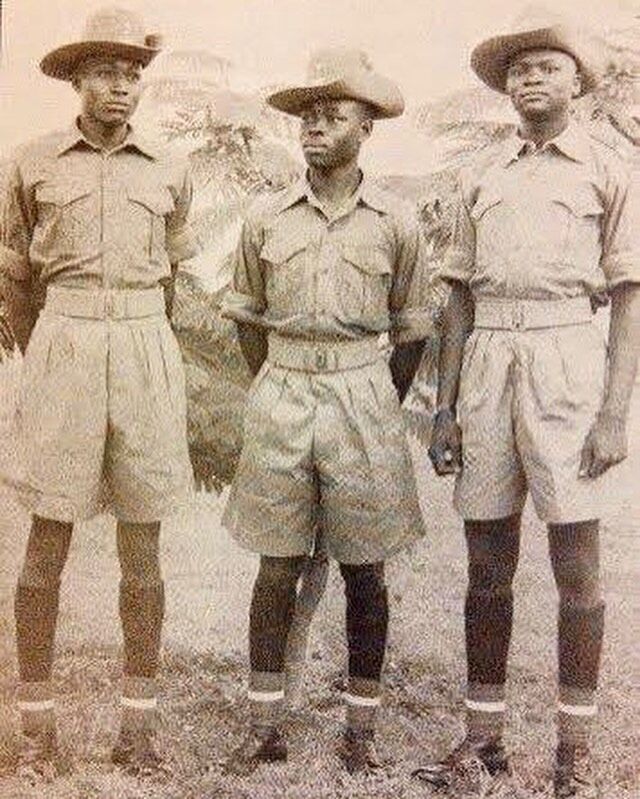
Throwback to a Picture of Abdulasalam Abubakar and Ibrahim Babangida, in their Twenties

Fifty-five years ago, a picture showed two youthful military leaders in their twenties during the 1960s:  Abdulasalam Abubakar and  Ibrahim Babangida. Babangida is currently 82 years old, and Abubakar is 81 years old. Both men are in their early 80s. Sani Abacha, their third acquaintance, would be 81 years old if he were still living. Nigeria’s military head of state,  Abubakar,  presided over the country from 1998 to 1999; Babangida did so from 1985 until his retirement in 1993.

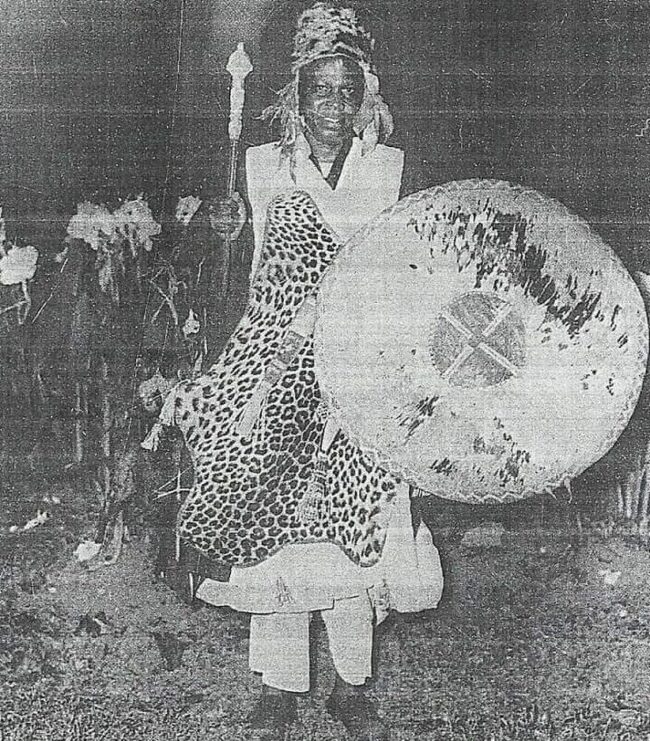
Chief Samuel Ladoke Akintola Dressed in Traditional Animal Skin for his Royal Installation as Aare Ona Kakanfo

Photo of Chief Samuel Ladoke Akintola, Premier of the Western Region, after he was installed by Alaafin Gbadegesin Ladigbolu II  of Oyo as the 13th Aare Ona Kakanfo (Military Generalissimo) of Yorubaland in 1964, after a 79-year sabbatical.  Akintola is dressed in a traditional animal leather garment, the clothing made of animal skins  represents fortitude, strength, and  power.