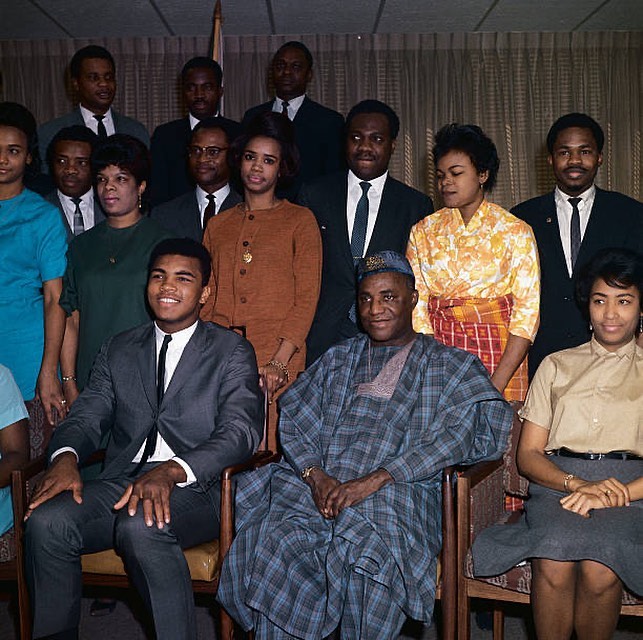
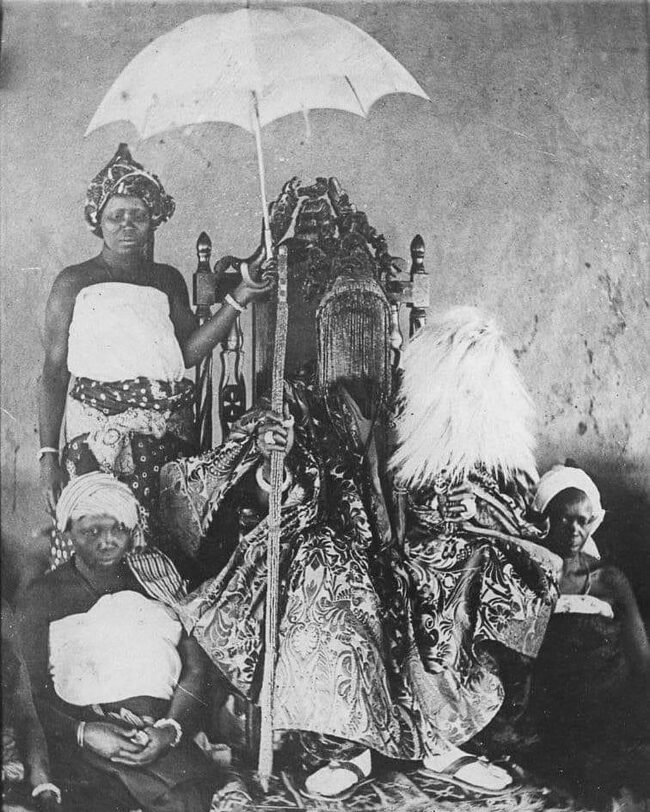
Alaafin Siyanbola Ladigbolu I, Alaafin of Oyo between 1911 -1944.

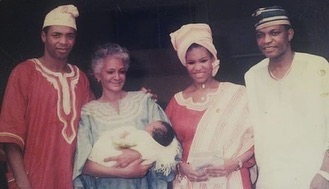
Iyamode is seated on the left, and Iya Naso is seated on the right. While there are eight strong women in the  Alaafin’s palace,  Iyamode, Iya Kere, and Iya Naso are the most formidable. The circumstances surrounding his death’s aftermath. The Death and King’s Horseman  When the 1946 ceremony commemorating the Alaâfins’ death was set to take place, a British officer went out and arrested Eleshin  Oba, throwing him into jail because, as per British law, attempting suicide is a crime. In order to bury his father, the son of Eleshin Oba, who was a trader in Ghana’s Gold Coast at the time, hurried back home. Upon witnessing him in life, he was so appalled by the depravity that he instantly took his own life. Pierre Verger first studied  and  recounted the historical incident in the 1960s. Prof. Wole Soyinka’s play was first released in 1975.
Brief Background on Oba Adeleke Adedoyin, the Akarigbo of Remoland.

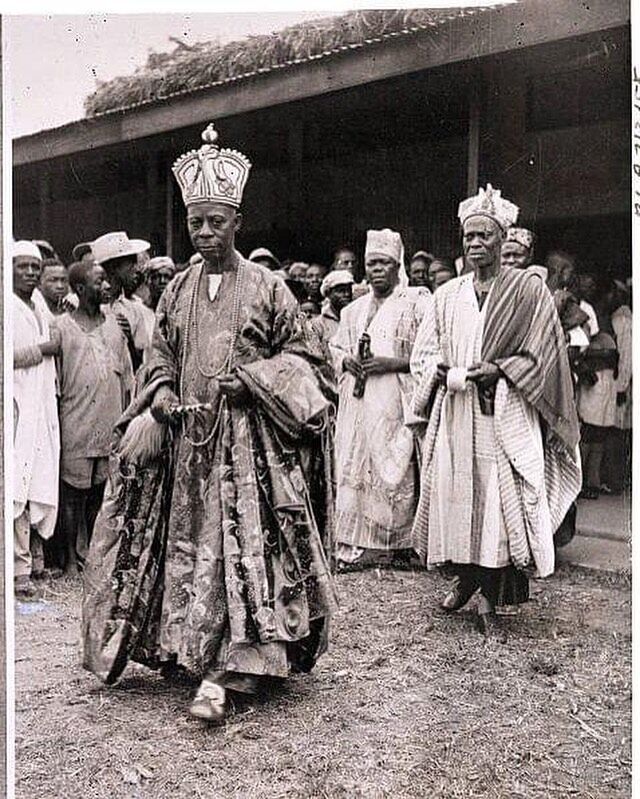
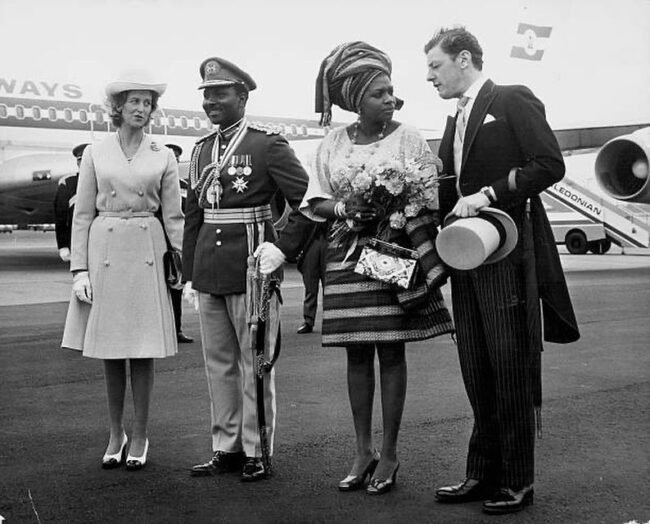
Williams In the latter part of the 1870s, Adeleke Adedoyin was born into the Anoko royal family of Ofin, Sagamu. He was a  direct  descendent of Sagamu’s principal founder, Akarigbo Igimisoje. Adedoyin was raised in a community south of Sagamu, assisting his mother in her career of selling food in Lagos. He finished his  elementary schooling with the Methodists in Lagos and went to Wesley College in Sagamu. Following his elementary schooling, he worked for a short time as an apprentice tailor until landing a job as Christopher Sapara Williams’ clerk. Adedoyin was introduced to numerous Lagos elites by Williams,  a trailblazing Nigerian lawyer,  and it was  because of  Williams’s influence on him that he took on the name Christopher William. He went back to Remoland in 1903, where he worked as a farmer, a tailor, and a public letter writer. He worked for Akàrígbò  Oyebajo Torungbuwa in 1905 as a clerk. IMAGE INFO: An image shows Oba Adeleke-Adedoyin, the Akarigbo of Remoland, arriving in Ibadan, Nigeria,  dressed in elaborately  embroidered robes, for a gathering of the Western Provinces’ Traditional Rulers, taking place at Mapo Hall in 1944

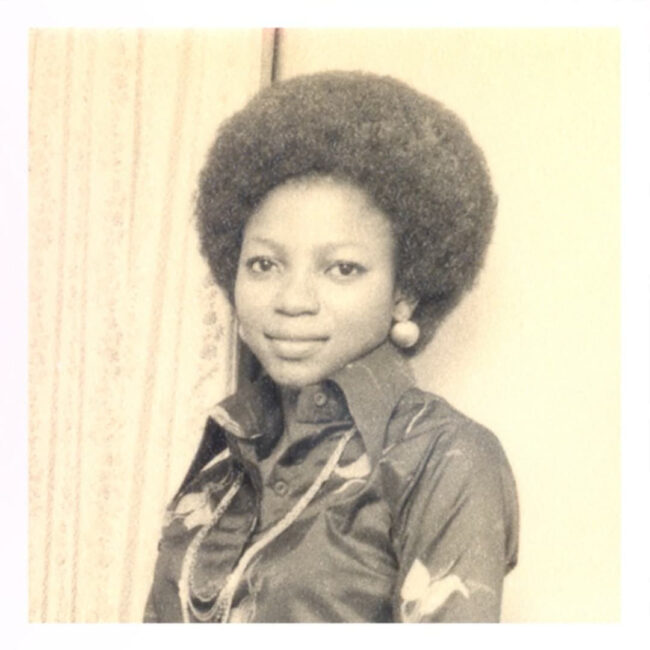
Africa’s Richest Woman, Folorunsho Alakija at 23.

The richest woman in Nigeria and Africa, Folorunsho Alakija, is shown in a 1974 photo as a youthful, attractive 23-year-old. Alakija was born in Ikorodu, Lagos (formerly Western Region, British Nigeria) on July 15, 1951. Her father, L. A. Ogbara, had eight wives and fifty-two children total; Folorunsho’s mother was his first wife. She holds the positions of Executive Vice Chairman at Famfa Oil Limited and Group Managing Director at The Rose of Sharon Group.

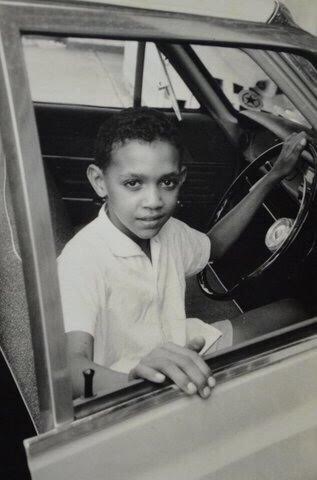
Young Ben Murray Bruce in the 1960s

Ben Murray-Bruce was born in Lagos to mixed-race Ijaw parents Margaret Murray-Bruce and Mullighan Murray-Bruce, who are both from Akassa in Nigeria’s Bayelsa State.He has a Scottish last name. After completing his elementary education at Our Lady of Apostles in Yaba, Lagos, and earning a West African School Certificate from St Gregory College in Obalende, he went to the University of Southern California in the United States, where he graduated with a bachelor’s degree in marketing in 1979. Evelyn Murray-Bruce and Ben Murray-Bruce were married for 41 years. He declared her death on March 20, 2021, following her fight with cancer.

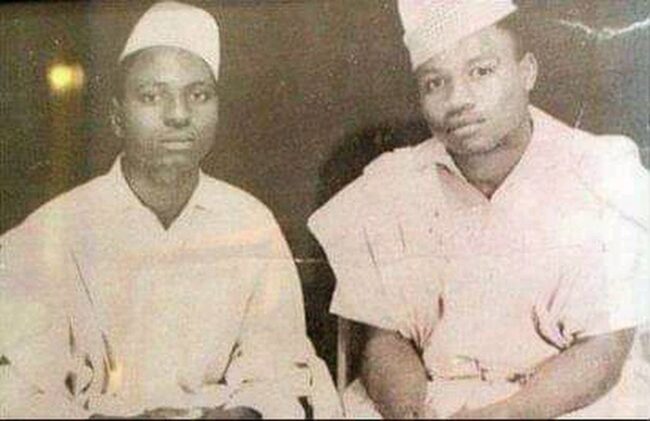
Picture of Abdulasalam Abubakar and Ibrahim Babangida in Their Youth

Fifty-five years ago, a picture showed two youthful military leaders in their twenties during the 1960s: Abdulasalam Abubakar and Ibrahim Babangida. Babangida is currently 82 years old, and Abubakar is 81 years old. Both men are in their early 80s. Sani Abacha, their third friend, would be 81 years old if he were still living. Nigeria’s military head of state, Abubakar, presided over the country from 1998 to 1999; Babangida did so from 1985 until his resignation in 1993.