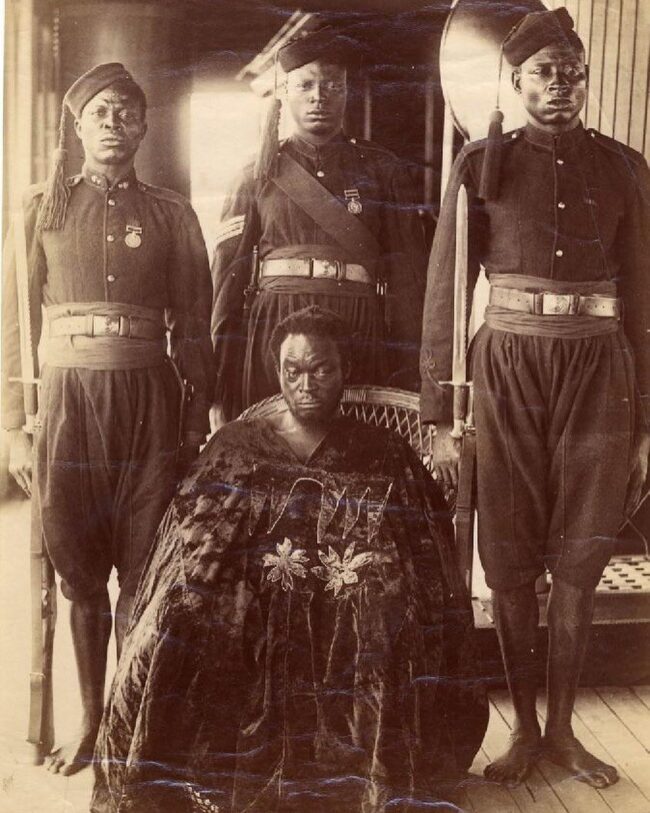
Story of Oba Ovonramwen Nogbaisi and His Exile to Calabar

Adóló’s son, Oba Ovonramwen Nogbaisi, was living in exile in Calabar, surrounded by members of his kingdom who worked for the  British administration while he was away. Ovonramwen will always be remembered as a hero  in the Benin Kingdom’s  history  because of his valor and bravery. James Robert Phillips, the Niger Coast Protectorate’s deputy commissioner  and consul, attempted to see Ovonramwen, the Oba of Benin, in Benin City in November 1896. The visit was intended to discuss a trade arrangement that the Oba was purportedly not honoring that he had previously established with the British. Phillips made a formal request to his superiors in London for approval to carry out the visit. But Phillips went to Benin City at the end of December 1896 without waiting for an official reply. A British mission left  the Oil  Rivers  Protectorate in January 1897 with the express purpose of holding talks with the Oba. The Benin authorities, on the other hand,  believed that the true goal was to remove the Oba from office and saw this as a direct threat to his sovereignty. The Oba’s generals  decided to launch an assault on the delegation as it got closer to Benin City. With only two survivors, the ambush claimed the lives of almost every member of the expedition, including eight British officers and hundreds of African laborers and porters. Admiral Sir Harry Rawson led a punitive expedition that the British mounted against the Kingdom of Benin in 1897 as payback. The expedition’s final acts were the ruthless demolition of Benin City, the theft of the renowned Benin Bronzes, and the methodical  demolishing of the city’s strong defenses. Oba Ovonramwen was to be executed by  the British, but he escaped  into the nearby  woodlands. On August 5, 1897, Ovonramwen finally made his way back to Benin City to  publicly surrender  after fleeing for  several  months. Upon his return to the city, he was resplendently attired, bedecked  with coral beads, and surrounded  by between seven  hundred and eight hundred followers. Desperate to escape banishment, Ovonramwen offered Consul General Ralph Moor 200 barrels of oil, worth £1,500, on the condition that he reveal the whereabouts of his 500 ivory tusks, which at the time were estimated to be worth over £2 million. This offer was  turned down, though, because Moor had already found the ivory. Historian Sven Lindqvist  describes this  sequence of events in his  book *Exterminate All the Brutes* as a British invasion. According to Lindqvist, Phillips’s expedition was a clandestine operation meant to make it easier for Oba Ovonramwen to be  overthrown rather than a diplomatic effort. Lindqvist claimed that the British army  disguising their troops  as bearers and their weapons as  luggage. Despite numerous cautions from the Oba’s messengers not to infringe Benin’s territorial sovereignty, Phillips allegedly attempted to  approach the Oba’s palace under the guise of talks.…
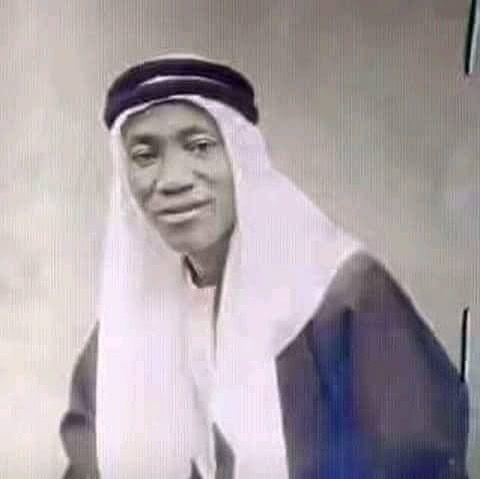
Legacy of Sheik Kamaldeen Habeeb Al-Adaby, also known as Sheikh Kamaldeen Habeebullah Al-Adabiy

Sheikh Al-Adaby was a well-known Islamic scholar, teacher, and spiritual guide from Nigeria. His notable contributions to Islamic education and the spread of Islam in Nigeria are well known. He was born in 1909 in Oke-Suna,  Ilorin, in Kwara State, Nigeria. The Ansarul Islam Society of Nigeria was founded by Sheikh  Kamaldeen in 1942  with the goals of  advancing Islamic education, morality, and social welfare. He founded a number of Islamic educational institutions through  this  group,  notably the renowned Adabiyya College in Ilorin, which rose to  prominence as a preeminent  hub for Islamic  education in  West Africa. His contributions to Islamic education had a  pivotal role in the dissemination  of Islamic knowledge  and literacy  among  Nigerian Muslims. Sheikh Kamaldeen was regarded as a spiritual leader with great respect due to his extensive understanding of Hadith, Quranic  interpretation, and Islamic law. He was well-known for his support of Muslim harmony and understanding,  and he made a  substantial contribution to the peaceful coexistence of various religious groups in Nigeria. Although Sheikh Kamaldeen Habeeb  Al-Adaby passed away on December 7, 2005, his legacy endures in the form of the numerous students he taught and the institutions hefounded. In Nigerian Islamic history, he is still held in high regard, and his efforts have a lasting impact on Islamic research and education in  the nation.

Seun Kuti’s Early Immersion in the Music Scene And His Attempt in Carrying on the Musical Heritage of the Kuti Family.

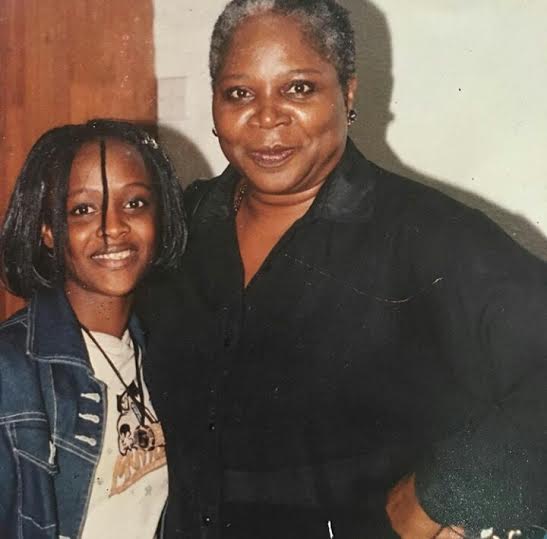
A picture from the early 2000s shows the well-known Nigerian singer Seun Kuti at a young age playing  a variety of musical  instruments. Born on January 11, 1983, as Oluseun Anikulapo Kuti, Seun Kuti is a well-known Afrobeat  artist who continues the  legacy of his renowned father, Fela Kuti. Seun was becoming well-known at this time in the Afrobeat music scene, which  he had  acquired from his father, who had been a pioneer in its growth. The image captures Seun’s early involvement in the music industry, demonstrating his commitment to his work and his part in  carrying on the musical heritage of the Kuti family. Seun Kuti is renowned for his stirring live performances and socially minded lyrics that frequently touch on subjects like social justice and governmental corruption. His efforts with Egypt 80, his band, demonstrate his  dedication to maintaining  and advancing  the  Afrobeat legacy. This early 2000s image shows not only his youthful energy but also the start of his path to become a  significant figure in African  and international music.

Biography of Renowned Writer, J. P Clark, and Co-Edited Black Orpheus

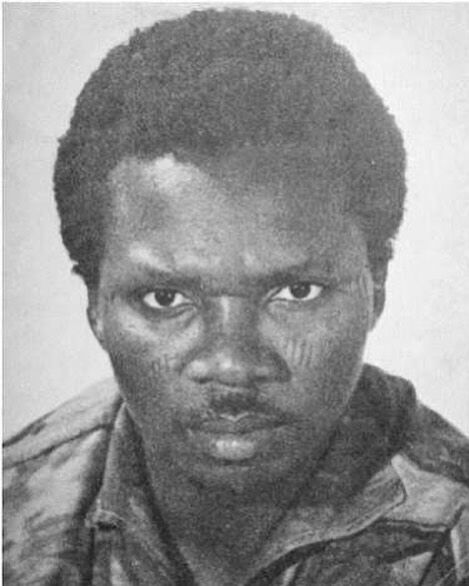
A snapshot from the 1960s shows a youthful J.P. Clark, illuminating the formative years of one of Nigeria’s most renowned writers. John Pepper Clark-Bekederemo, popularly known as J.P. Clark, was a trailblazing Nigerian poet and  dramatist who lived  from 1935  to 2020. His influence on African writing is still felt today. Clark was born in Kiagbodo, Delta State, Nigeria, to an Urhobo  mother and  an Ijaw father. His multicultural background had a big influence on his writing. His love of reading was sparked by his early schooling at the Native Authority School in Okrika and then at Government College in  Ughelli. Clark attended the University of Ibadan to further his studies, where he graduated with a Bachelor of Arts in English. He worked in academics and journalism. He started off as an information officer and then worked  for the *Daily Express*  as the  features editor. His academic career took off at the University of Lagos as an English professor and at the Institute of African Studies. He co-edited *Black Orpheus*, a crucial forum for advancing African literature, throughout his time there. To promote the performing  arts in Nigeria, Clark and his spouse, Professor Ebun Odutola, founded the PEC Repertory Theatre in Lagos in 1982. Clark gained  international notoriety by accepting visiting professorships at esteemed colleges including Yale and Wesleyan. Throughout his life,  Clark promoted African writing, using his writing to explore difficult societal challenges and the essence of humanity. His literary legacy lives on, inspiring and enlightening readers all around the world.

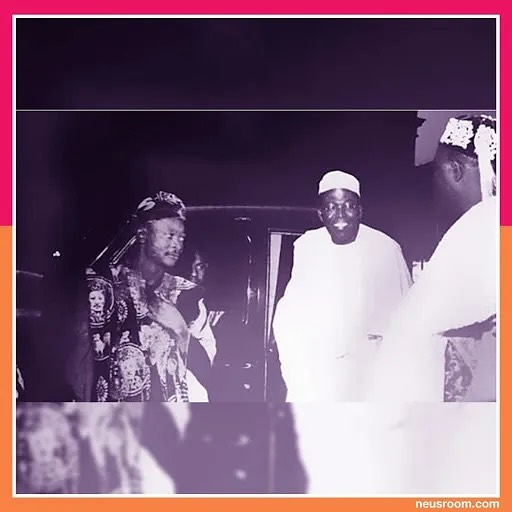
General Olusegun Obasanjo’s Visit to Lamido of Adamawa, Aliyu Musdafa in 1978

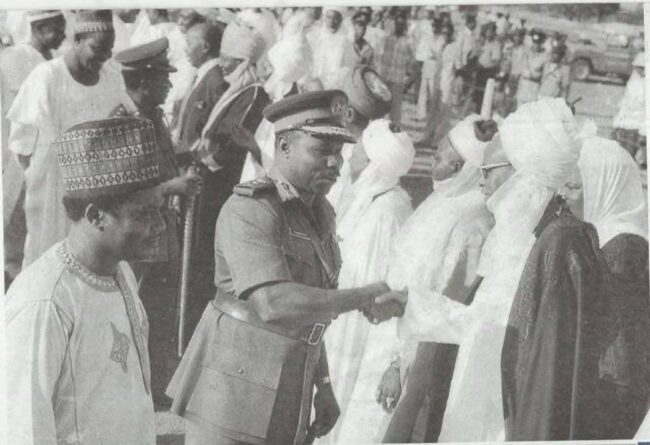
In a historic 1978 photo, General Olusegun Obasanjo of Nigeria is cordially welcomed to Yola by the Lamido of Adamawa, Aliyu  Musdafa. This picture captures the close bond between Nigeria’s military authorities  and traditional leaders  at a pivotal  point in the  nation’s history, as well as the robust traditions of the Adamawa Emirate. The Lamido, clad in traditional garb,  stands in for  Adamawa’s rich cultural legacy. His cordial greeting of General Obasanjo, who was guiding the nation  during a moment  of transition, emphasizes the deference that traditional authority and military commanders have for one another. In order to establish ties with Nigeria’s many regions and guarantee that traditional leaders had a say as the nation was ready to  transition to civilian administration in 1979, Obasanjo made the trip. The image documents a significant political occasion and  demonstrates the continued importance of traditional institutions to Nigerian identity and governance. More than just a ceremonial gathering, this one in Yola represented the continuity and togetherness these leaders sought to establishin a country with a diverse population.

Brief History of Adegoke Adelabu; His Life Achievement and Death

The famous picture of Obafemi Awolowo and Adegoke Adelabu in Ibadan. A prominent political figure in Ibadan and the  Western  Region, Gbadamosi Adegoke Adelabu came from modest beginnings to become a prosperous merchant and powerful politician. He was Nigeria’s Minister of Social Services and Natural Resources before rising to the post of leader of the opposition in the  Western Regional Assembly. Tragically, a deadly car accident in 1958, just as Nigeria was on the verge of independence, ended Adelabu’s promising career. The image represents the rivalry and cooperation between Adelabu and Awolowo, two significant figures in the future development of Nigeria. Adelabu’s legacy endures as a testament to his aspirations, tenacity, and advancement.

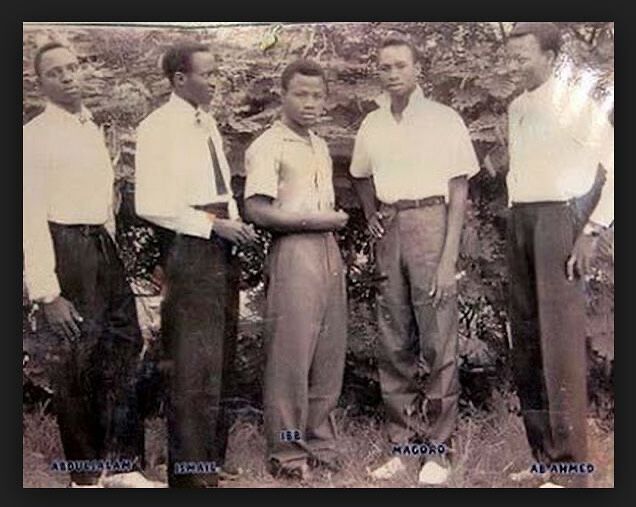
General Ibrahim Babangida, General Abdulsalami Abubakar, Major General Mohammed Magoro, and Their Peers During an Advanced Military Course in India.

During an advanced military course in India, Generals Ibrahim Babangida, Abdulsalami Abubakar, Major General Mohammed  Magoro, and their colleagues were present. This historically significant photo shows these youthful men  prior to their ascent to  the  pinnacles of Nigerian political and military authority. The course in India was a part of a larger initiative to give Nigerian military personnel sophisticated military training and exposure to  other countries, both of which are necessary for developing a strong and capable armed forces. With a determined approach,  Ibrahim Babangida, who would go on to become the military president of Nigeria from 1985 to 1993. Alongside Abdulsalami Abubakar, who would go on to become the head of state and usher in civilian rule in Nigeria in 1999, Major  General Mohammed Magoro, another significant player in the country’s military history, bolsters the group’s powerful presence. These officers’ training in India was more than simply a course; it was a trial that created enduring relationships amongst them and  gave them the information and abilities that would affect their future roles in determining Nigeria’s fate. Nigerian military officials  benefited greatly from the worldwide military exchange programs of that era, which helped them develop both a global perspective and technical proficiency.