Actor Ramsey Noah Reminisces on Filming as an 8 Year Old

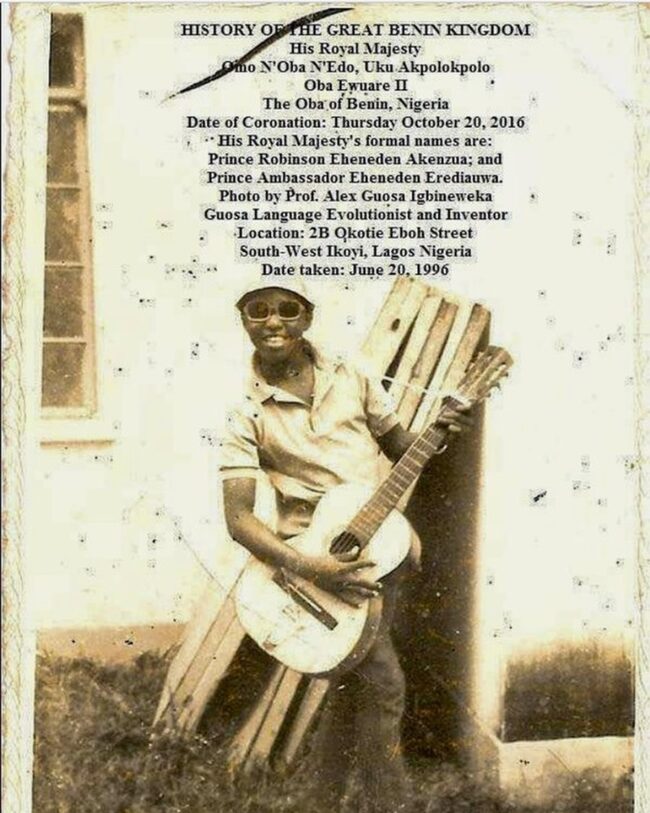
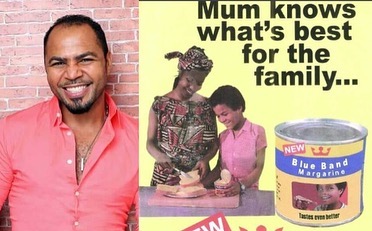
Ramsey Noah, a Nigerian actor, has revealed several secrets that we were unaware of for years. Ramsey Noah revealed that he was the brand’s eight-year-old face when sharing a picture of Blue Band margarine. Filming today is more comfortable, the renowned actor claims, after realizing how tiresome the brand’s commercial video production was. He stated, what do you think? That’s me when I was the 8-year-old brand ambassador for BLUE BAND. God had obviously planned for me to be the center of attention from the moment I was born.  I realized how comfortable filming today is when I think back on how tiresome the commercial’s still and video shoot was. The camera was enormous, and the lights were so big that they could cook croaker fish with their heat. It wasn’t humorous at all that they had to take off my clothes more than four times to iron off the perspiration because I was perspiring so much. And now that it has happened, I am filled with nostalgia for it and the development of our industry since then.
Brief Background of His Royal Majesty, Omo N’Oba N’Edo, Uku Akpolokpolo Oba Ewuare II

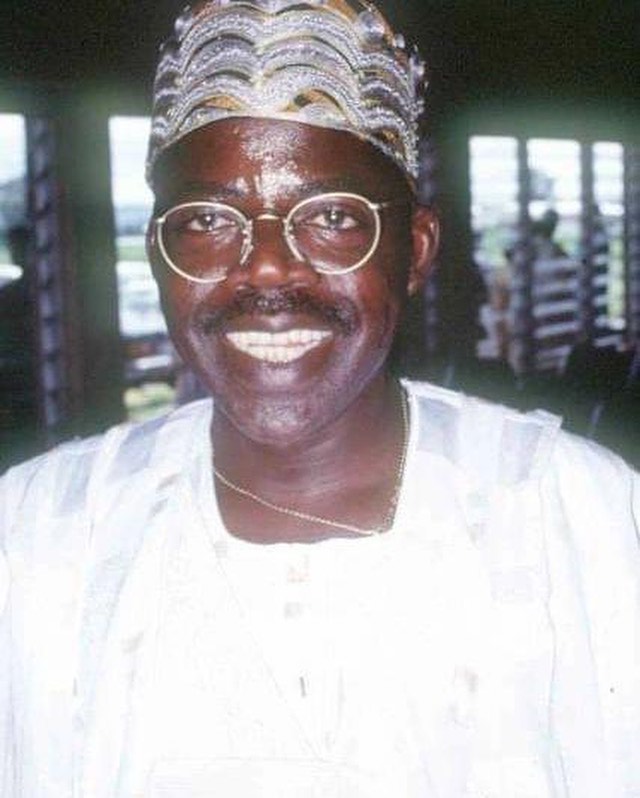
Prior to ascending to the position of Oba of Benin, Eheneden Erediauwa studied at Immaculate Conception College in 1968 and Edo College in Benin City, Nigeria, from 1965 to 1967. He received his A-Level diploma from London’s South Thames College. He earned a degree in Economics from the University of Wales in the United Kingdom and a master’s degree in public administration from Rutgers University Graduate School in New Jersey, in the United States. He was employed at the UN from 1981 to 1982. In addition, he represented Nigeria as an ambassador to Sweden, Norway, Denmark, and the Finnish Republic. Additionally, he served as Nigeria’s envoy to Italy. When Ewuare was anointed Oba, he was wed to Princess Iyayiota (Obazuwa N’erie), Queen (Oloi) Iroghama (Obazuaye N’erie), and Princess Ikpakpa (Ohe N’erie). Later, he married other women.

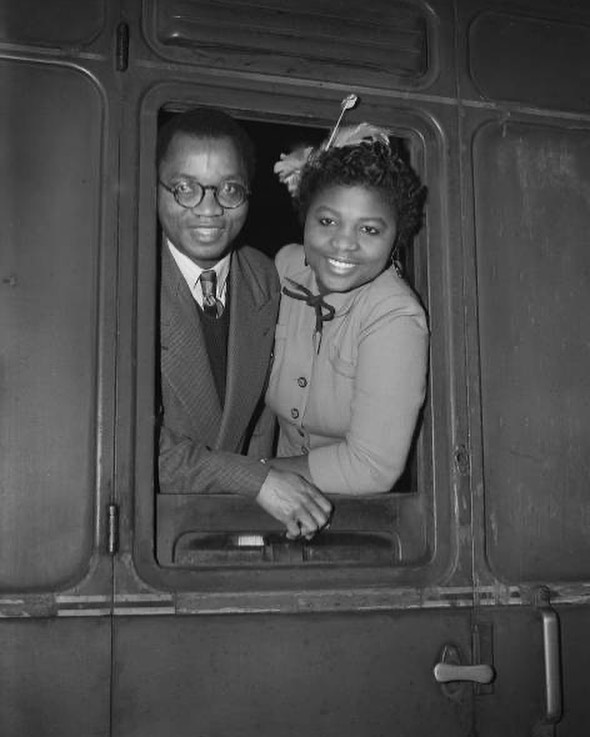
Beautiful Picture of Nigerian Lawyer and Politician, Okoi Arikpo and his Wife Asi Archibong-Arikpo

Dr. Okoi Arikpo was a Nigerian scientist, anthropologist, lawyer, politician, and diplomat who was born in Ugep Cross River, Calabar. He was Nigeria’s foreign minister at the time. Early in the 1940s, Dr. Okoi Arikpo served as president of the West African Student’s Union in the United Kingdom. Students from West Africa studying in Great Britain used this organization as a focal point. In order to bring attention to the political issues that African colonies and their leaders are confronting back home in various African countries, WASU engaged in lobbying members of the British Parliament. The organization served as the focal point for the mobilization of some left-leaning individuals to support the struggle of the colonial territories.

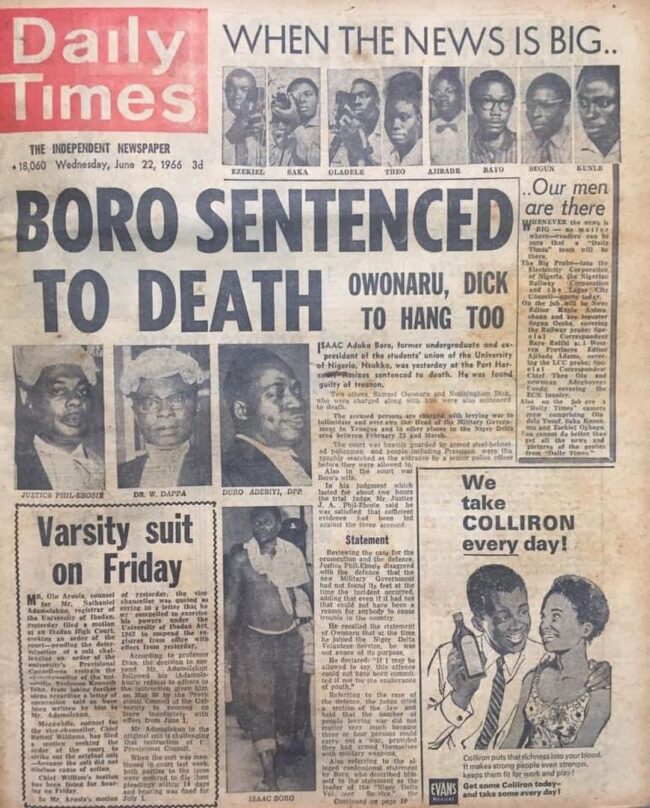
Major Isaac Jasper Adaka Boro Sentenced to Death by Maj. Gen. Aguiyi-Ironsi Government

The first secessionist from Nigeria, known as “Boro,” was an Ijaw soldier from the Niger Delta and a nationalist. He is credited with starting the movement for minority rights in Nigeria. On February 23, 1966, he proclaimed the “Niger Delta Republic” to be independent: He uttered: “This is an important day in the history of the Niger Delta as well as in your own life. It might turn out to be the best day in a very long time. This is not because we intend to put the sky to an end, but rather to show the world our thoughts and feelings on oppression. Remember your impoverished folks; remember your 70-year-old grandma who still farms before she eats; remember your petroleum that is being pumped daily from your veins; after that, struggle to be free.” He was born in the little village of Oloibiri in Ogbia LGA, which is in Bayelsa State, in the eastern Nigerian Niger Delta. In Nigeria’s oil and gas sector, Oloibiri is a historic town. On January 15, 1956, Shell Darcy made the first commercial oil discovery in Nigeria, in the village of Oloibiri. Odumegwu-Ojukwu received an instruction from Aguiyi-Ironsi to find Boro. Federal troops surrounded Mbiama and its surroundings. Since they didn’t discover Boro and his boys right away, they claimed to have received intelligence that he was hiding underwater at Mbiama. They were informed that the Ijaw man could survive for days underwater, so they decided to bomb the river at Mbiama in an attempt to kill Boro or force him to emerge from the water. Actually, somewhere in late February 1966, there was a bombing of the Engenni river at Mbiama. The Ijaw locals were startled as the air force plane went extremely low, all the way up the river to Joinkrama and the surrounding bushes. The majority of Nigerians have not benefited from the oil discovery in Oloibiri; instead, it has mainly caused environmental degradation and the eradication of the Niger Delta’s indigenous population’s way of life. Additionally, with a starting daily production of 5,000 barrels of oil (which would eventually increase to 2,000,000)

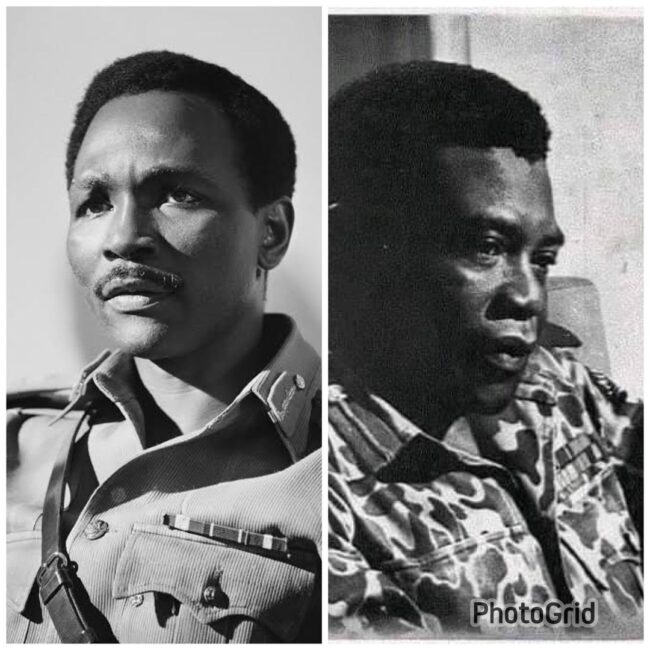
“Rising Sun of Biafra is set forever.”- Major General Yakubu Gowon Declares

1970 saw the capitulation of Philip Effiong, the Chief of General Staff of Biafra during the Nigeria-Biafra War, to Major General Yakubu Gowon, the Head of State Odumegwu Ojukwu. The January 1970 Civil War Victory Message from Major-General Yakubu Gowon, the Head of State of Nigeria: The alleged “Rising Sun of Biafra” is set forever. Anybody who continues to refer to any region of the East Central State of Nigeria as Biafra is doing a grave disservice. The violent chapter has now come to an end. The era of national reconciliation is just beginning. We have the chance to create a new nation once more.

How Bola Tinubu Escaped Assassination Attempt in Lagos, 1999

Lagos State Governor Bola Tinubu escaped an attempted assassination on Sunday that resulted in the deaths of four other persons, according to a story from the Guardian newspaper. Recounting his experience, Tinubu—who escaped unharmed—said that on his way home from a tour of the city’s waste collection operations and security measures, assailants opened fire on his convoy. According to AFP, Police Commissioner Mike Okiro attributed the attack to the Yoruba Oodua People’s Congress, which has been implicated in other ethnic violent breakouts over the previous two months that have claimed the lives of about 100 people. According to The Guardian, two well-known persons have been detained by police in relation to the governor’s attack. The attack, according to Tinubu, supported his claim that the state needs at least 20,000 more police officers to protect the  lives and property of the eight million people living in Lagos, according to The Guardian 

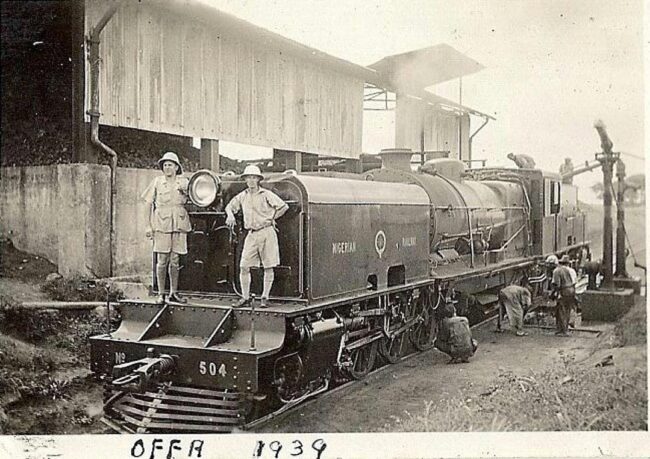
Establishment Of the Nigerian Railway in1912

The Lagos Government Railway and the Baro-Kano Railway were combined by Frederick Lugard in October 1912 to form the Nigerian Railway, which became the official name of the system. The combination made the Northern and Southern Nigeria Protectorates much more desirable to combine. With branch extensions, the railway line operated on two main North and South trunks: one from Lagos to Nguru and the other from Port Harcourt to Maiduguri. The Nigerian Railway Corporation took over coordination of the nation’s railway network in the 1950s, in part due to financial considerations. West Indians were among the diverse workforce of Nigerians working by the rail transport system, who came from a variety of ethnic backgrounds in the nation. The government railway department was divided into four main divisions before the Nigerian Railway Corporation was established: the engineering department, the running department, the traffic and commercial department, and the accounts and stores department. Prior to 1912, when the Lagos Railway was only getting started, Governors MacGrogor and Egerton had colonial goals of building a railroad from Lagos to the furthest reaches of Northeastern Nigeria and opening up trade with the interior of Southwest Nigeria. The railroad bridge built along two important road networks that connect the Island with other sections of Lagos, the Carter bridge and the Denton bridge, is what allowed the railway terminal at Iddo to be built in Lagos. It also serves as a transit station for trains traveling across the island. Additionally in 1896, work on building a railway   started in the Iddo region. It was extended along the Lagos route, stopping at Otta, Ifo, Arigbajo, Papa Alto, Abeokuta, and Ibadan (1901). However, the Southern Nigerian railway’s continued growth was impeded by financial issues. Plans to connect Ibadan with Oyo (1907) and Benin with Sapele (1906) failed. A railroad connecting Ibadan with Osogbo and Ilorin was officially sanctioned in 1904, and development from Ilorin to Jebba was authorized in 1907.