Details of the Birth and Legacy of Late Chief Margaret Ekpo

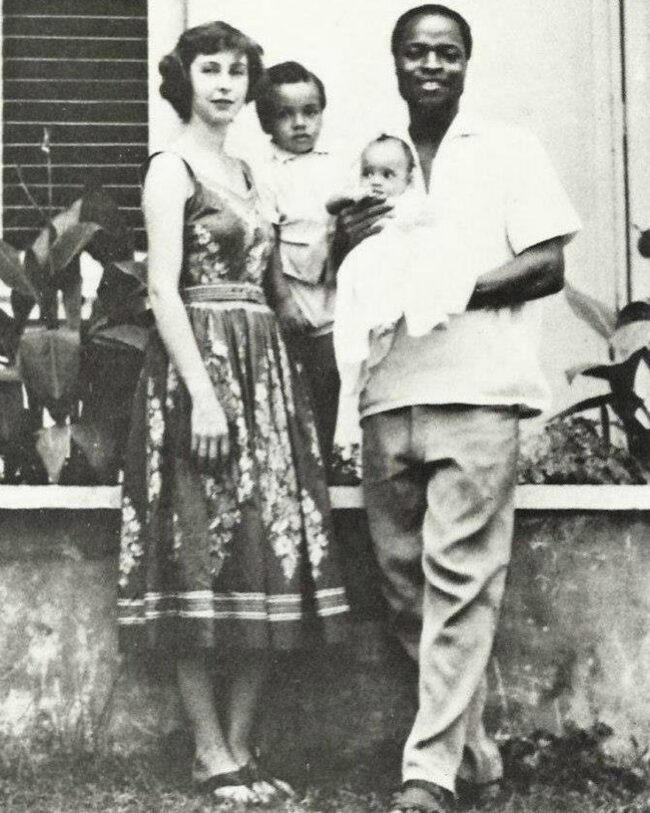
Born on July 27, 1914, Chief Margaret Ekpo passed away on September 21, 2006.She was a social activist and women’s rights advocate who also happened to be a trailblazing female politician during the First Republic of the nation. She belonged to a group of traditional Nigerian women activists who inspired women to go beyond ideas of ethnic solidarity. She was a prominent nationalist and grassroots politician in the Eastern Nigerian city of Aba during a period when the movement was dominated by men and hierarchical. The family of Okoroafor Obiasulor, who was originally from Aguluzigbo, a rural town in Anaocha Local Government Area of Anambra State, and Inyang Eyo Aniemikwe, gave birth to Margaret Ekpo in Creek Town, Cross River State. She was a descendant of King Eyo Honesty II of Creek Town through her mother. In 1934, she obtained a standard six on her school leaving certificate. However, after her father passed away in 1934, she decided to postpone her plans to pursue a degree in teacher preparation. After that, she began working in elementary schools as a student teacher. In 1938, she wed John Udo Ekpo, a physician. She was of Igbo and Efik descent, whereas he belonged to the Ibibio ethnic group. Later, the couple relocated to Aba. In 1945, Margaret Ekpo took part in political ideas and associations for the first time. Her husband was furious about how native Nigerian doctors were treated by colonial administrators, but he was unable to attend meetings to voice his concerns because he was a civil servant. Then, Margaret Ekpo attended meetings in lieu of her husband.  The purpose of the meetings was to address the unfair practices of the colonial administration in the city and to combat the disparity in racial and cultural advancement within the administrative ranks. Later, she went to a political rally where she was the only female witness to the passionate speeches delivered by Herbert Macaulay, Mbonu Ojike, and Nnamdi Azikiwe.  She established the Aba Market Women Association at the close of the decade in an effort to unionize the city’s market women. She advocated for women’s solidarity within the organization and used it as a springboard to fight for women’s economic rights, economic protections, and expanded political rights. Ekpo’s tenure in politics came to an end when the Nigerian Civil War…
Reign of Oba Aiguobasinwin Eweka II Post Benin Punitive Expedition

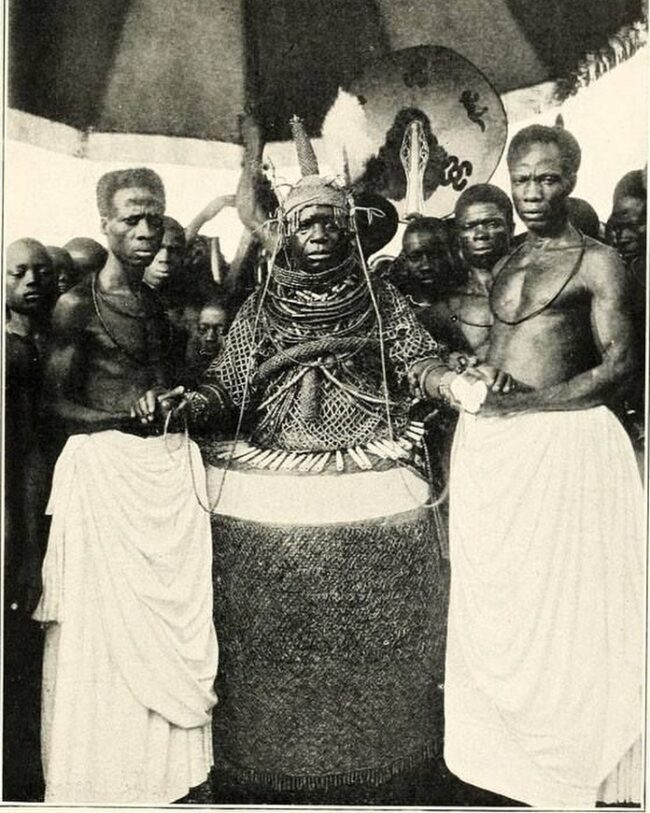
Oba Aiguobasinwin Eweka II’s reign was a period of significant changes in the Benin Kingdom. He navigated the challenges of colonial rule and worked to preserve and protect the traditions and cultural heritage of his people. Despite the limitations imposed by British colonial authorities, he managed to maintain the essence of the kingdom’s monarchy and its traditional governance structure. He is remembered for his efforts to revive and promote traditional arts, crafts, and festivals in Benin. Under his reign, certain aspects of Benin’s cultural identity were revived and celebrated, contributing to the preservation of the kingdom’s unique heritage. Overall, Oba Aiguobasinwin Eweka II’s reign demonstrates the Benin people’s tenacity and resolve to maintain their cultural identity and customs in the face of colonial influence. He was a key figure in Benin’s history during a period of substantial change and outside pressures.

Origin of Fela’s Music Career and Establishment of his Music Band

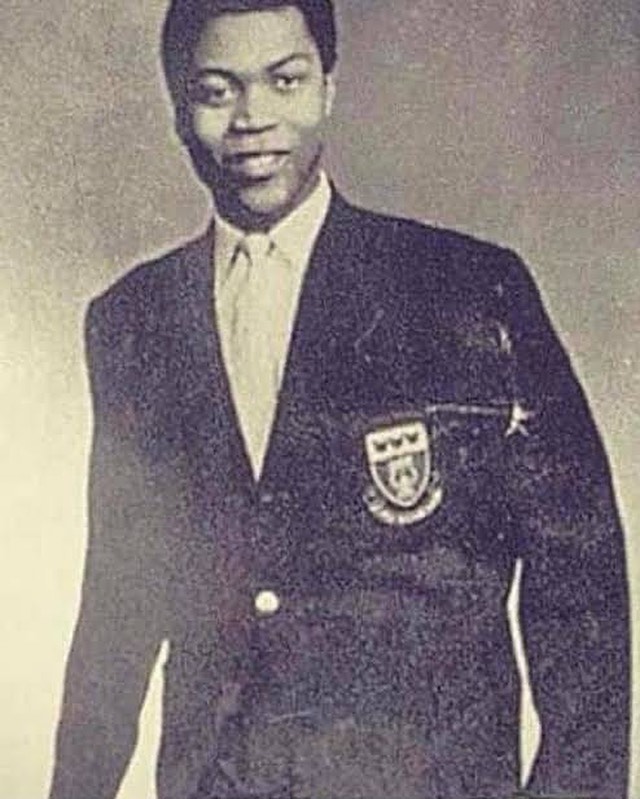
Young Fela Kuti at Trinity College of Music in London in the late 1950s, in the College Blazer. Trinity College, one of the oldest and most esteemed music schools in the world, was established in 1872. After his parents sent him to London to study medicine, Fela arrived in 1958 to study composition and trumpet performance at Trinity College of Music, which is now known as Trinity Laban Conservatoire of Music and Dance. His band Koola Lobitos, which invented the modern Afrobeat musical genre, was formed while he was a student. James Brown, Miles Davis, Frank Sinatra, Yoruba traditional music, and Ghanaian and Nigerian “highlife” culture were among the influences on his music. As a result, Koola Lobitos became a mainstay of the London music scene. Following Fela’s return to Nigeria in 1969, Koola Lobitos underwent several identities, including Nigeria ’70, Afrika ’70, Egypt ’70, and Egypt ’80. While on tour in the United States in 1969, he became aware of the Black Power movement, which had a significant impact on his music and caused his songs to address social and political issues.

The Unique Terracotta Work of Art from Ilé Ifè

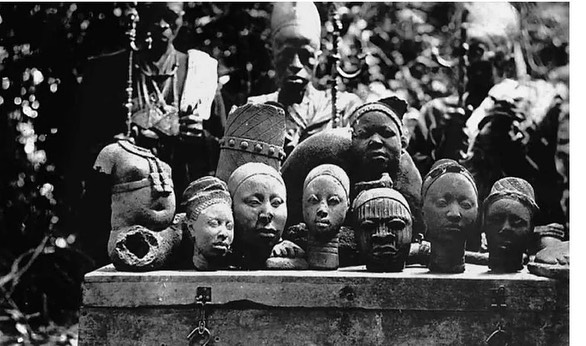
Regarded as some of the most advanced works of art in the world at the time. Over time, the true historical account surrounding these outstanding pieces of art has assumed various forms. If the terracotta figures from Ilé Ifè are any indication, civilization there began a very long time ago. During his 1930 visit to the Iwinrin Groove, Wilfrid D. Hambly, the first curator of African ethnology at the Field Museum of National History in Chicago, was guided along a narrow path to see a scared ceremony and the unveiling of the sacred terracotta. The sculptures were initially protected from theft at the shrine by being hidden beneath clay pots; later, they were kept in a padlocked box in a specially made mud building in the groove. The artwork was brought to the Palace in 1934 by HRM, Oba Adesoji Aderemi, the Ooni of Ilé ife, for safekeeping until they could be moved to the National Museum of Ife Antiquities. Image 1: In Iwinrin Groove in Ilé ifè in 1930, a priest opens a box containing holy terracotta heads. Image 2: In 1931, terracotta heads were found in Iwinrin Groove at Ile Ife.    

Brief Background of Obi Okosi of Onitsha

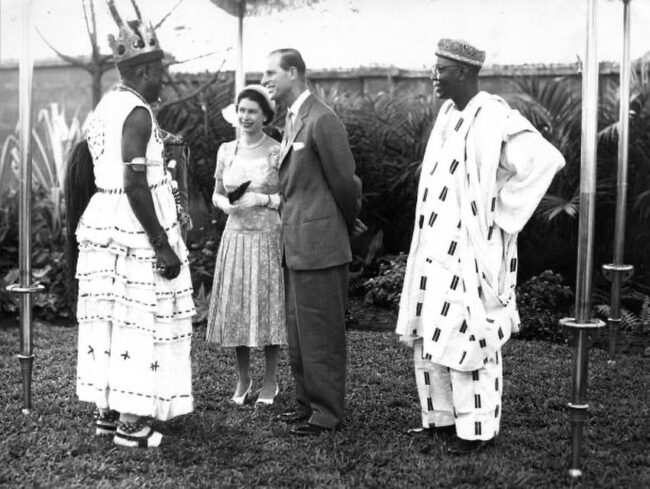
Obi Okosi was a king who was not just descended from nationalists. He discovered an African leader in Nigeria, and he perceived Africa as a powerful force in resolving global issues. He devoted his life to achieving internal harmony, peace, and security because he felt that “charity begins at home.” Thus, King Okosi of Onitsha labored nonstop and in silence to foster respect, understanding, and unity among all the tribes that were under his sphere of influence. His goal both inside and outside the Palace was to unite all different viewpoints in order to advance a cause of peace and unity beyond his own borders in this nation and, in the end, to take all of Africa with her into the front ranks of global powers by blending all of Nigeria into a single understanding. Among all his forebears, Obi Okosi lived to witness a united Onitsha, a place where all tribes coexisted as one, sharing one another’s problems and struggles through mutual understanding. He was a kind and endearing king. Image info: Queen Elizabeth Il, Obi Okosi of Onitsha, Dr. Nnamdi Azikiwe, and Prince Philip discussing at a reception in Enugu.  

Story of Abiodun Egunjobi (Abbey Godogodo), One of Nigeria’s Deadliest Armed Robber

Big crimes have been suffered and overcome in Nigeria. The 1970s saw Oyenusi, the 1980s saw Anini, and the 1990s saw Shina Rambo. Their atrocities lasted no more than five years, according to Derico Nawa mama in the early 2000s. But one of the largest and longest periods of terror in Nigerian history was the reign of Abbey Godogodo in the early 2000s. Abiodun Egunjobi, also known as Godogodo, 36, emerged as the leader of a group that terrorized Lagos and the southwest with reckless abandon. The gang defied all logic, struck with accuracy, and killed without compassion. Godogodo, who had served seven years in prison for a crime he believed to be insignificant, set off on his journey into the dangerous world of crime. He was a junk trader in the Abule-Egba slum of Gatankowa when he got into a brawl and was taken into custody by the police. Godogodo was put in jail because he had no one to save him, him, and he felt that the police had wronged him by sending him there. He made friends with more dangerous armed robbers while incarcerated, formed an alliance with them, and spent time learning under their tutelage. Upon his release from prison, he resolved to take legal action against the police for their seven-year incarceration of him.  Godogodo, also referred to as the one-eyed assassin, caused the Lagos State Police Command so many headaches during the course of 14 years prior to his arrest on August 1, 2013, that the command rejoiced on the day of his arrest, knowing that at least its men would be safe from his guns. Godogodo, a ‘hefty man’ who was born in 1977 in Atan, Ogun State, turned to crime after he ran away from his parents’ house to live in the slum of Gatankowa in the Abule-Egba neighborhood of Lagos. In order to survive, he sold cigarettes and booze here. Later, he would run into a group of criminals who had a bag of firearms with them.  “I was co-opted into the gang, but I wasn’t satisfied with what they were giving me after each operation, so I joined another …

Story of Austrian Lady, Susanne Wenger and her Influence in Osogbo, Osun State

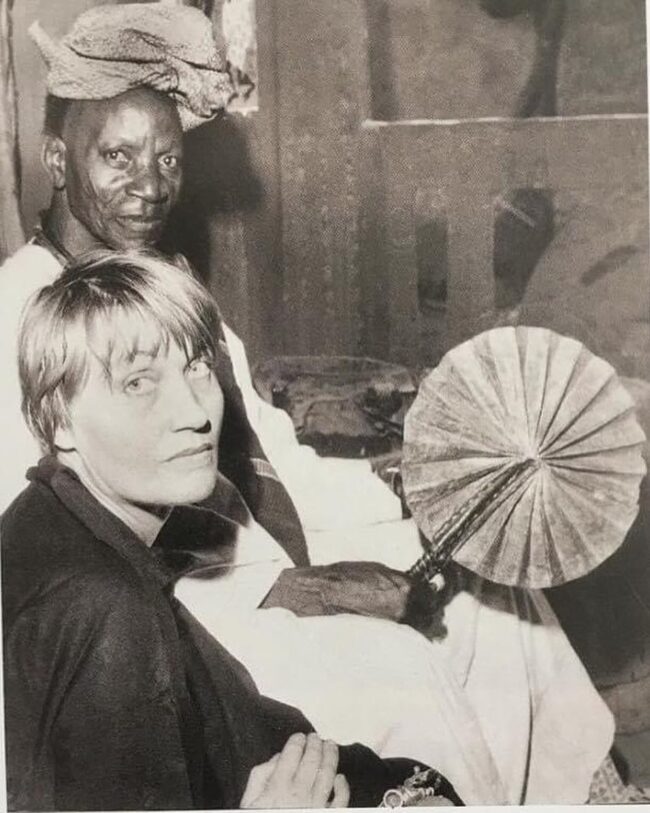
Adunni Olorisha Susanne Wenger (left) and Ajagemo (right), a high priest of Obatala in Ede, Osun; Obatala is the father of all orishas and all humankind. She contracted tuberculosis within a year of her arrival from Austria, which led to a spiritual awakening and her conversion to the Yoruba religion. She met Ajagemo, an Obatala priest, at Ede and was drawn to the religion. Wenger was first exposed to the Yoruba language, religion, and way of life by Ajagemo, and the two quickly grew close. Wenger experimented with vibrant designs inspired by Adire manufacturing methods during this time. In the end, Wenger and Beier got divorced. Wenger then wed a local drummer named Lasisi Ayansola Onilu, and by then, she was making a name for herself as a leading figure in the Orisha faith rebirth. After leaving Ede and relocating to Ilobu, Wenger settled in Osogbo in 1961 and rose to prominence as an advocate for the Osun Grove. She performed community service by working with the Public Works Department and an artist collective to destroy termites and rebuild the shrine’s buildings and carvings using cement and wood. She became the protector of the Sacred Grove of the Osun goddess on the banks of the Osun River in Oshogbo and founded the archaic-modern art school “New Sacred Art,” which was a branch of the larger Oshogbo school. In addition to expressing the actions and purposes of the particular orishas, Wenger’s artwork also portrays the social lives of both traditional religion devotees and non-adherents. Her home serves as a gallery for her artwork because so much of the furniture inside features motifs from Yoruba art. At the age of ninety-three, Susanne passed away at her Òṣogbo residence on January 12, 2009.