
Rare Picture of Billionaire, Femi Otedola as a Baby
An image from Ibadan showing FEMI OTEDOLA driving his first car as a toddler about 1963. The striking thing about this photo is how unchanged Femi Otedola’s visage looks even now.


An image from Ibadan showing FEMI OTEDOLA driving his first car as a toddler about 1963. The striking thing about this photo is how unchanged Femi Otedola’s visage looks even now.
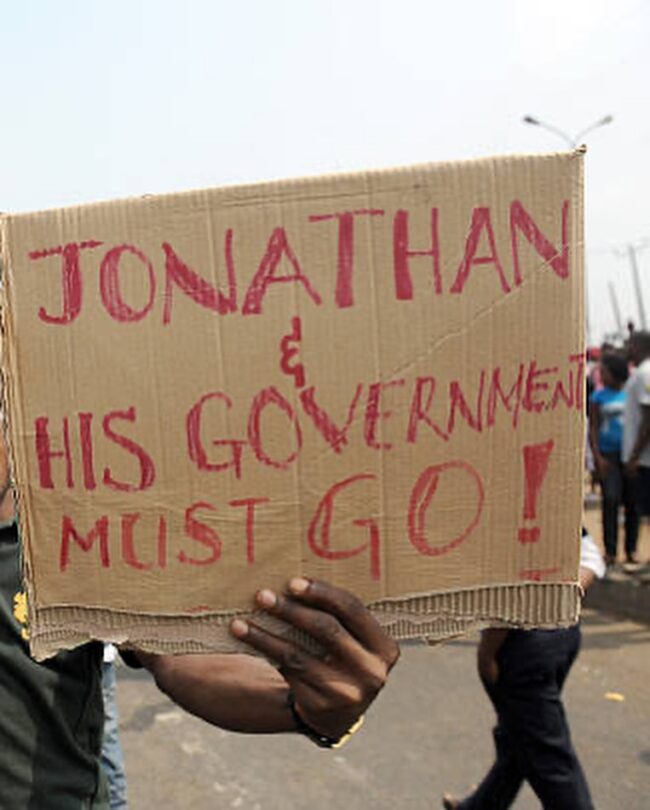
A socio-political protest movement known as Occupy Nigeria was launched in Nigeria on Monday, January 2, 2012, in response to President Goodluck Jonathan’s Federal Government’s decision to remove fuel subsidies on Sunday, January 1. There were protests all over the nation, notably in London at the Nigerian High Commission and in the cities of Kano, Surulere, Ojota (which is a part of metropolitan Lagos), Abuja, and Minna. Civic disobedience, civic resistance, strike actions, marches, and online activism were all featured in the protests. Image info: At a workers’ rally in Gani Fawehinmi Partk, Ojota district, Lagos, on January 13, 2012, participants protested against the government of President Goodluck Jonathan’s decision to raise the pump price from 50 Naira to 65 Naira and then 87 Naira.
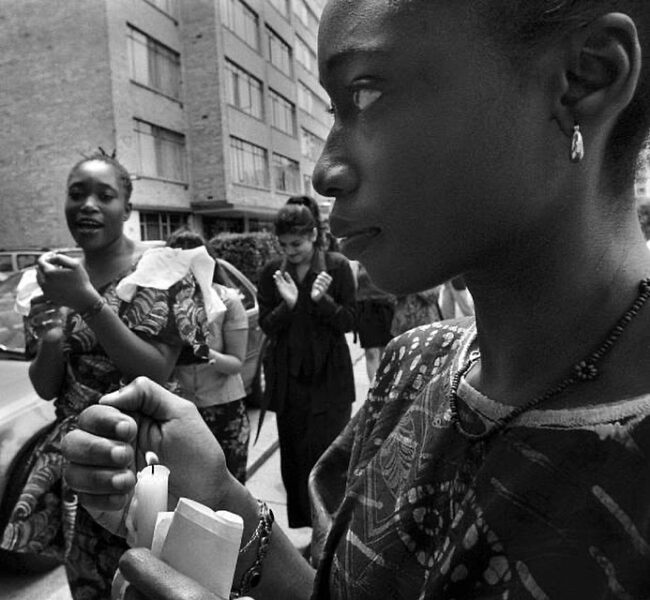
Hafsat Abiola, Kudirat and Moshood Abiola’s daughter, planned a vigil for her parents in 1998. Her father died in 1998 while being held captive by the then-president of Nigeria, General Sani Abacha, and her mother was slain in Lagos in 1996. The candlelight vigil was held at the UK’s Nigerian Embassy.
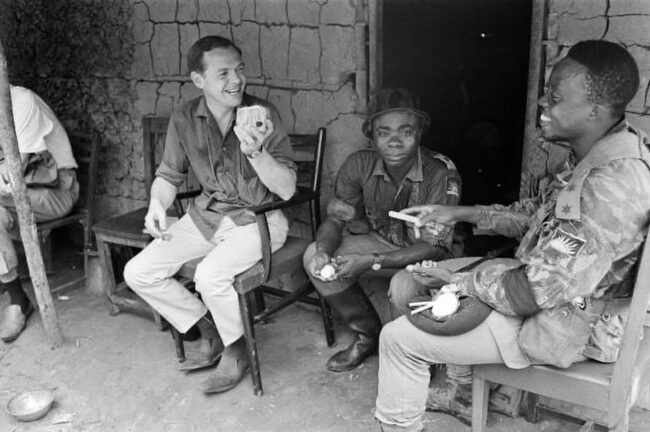
During the Nigerian civil war, a Biafran officer is pictured here with Daily Herald staff photographer Ron Burton (left). Located in Arlington Heights, Illinois, a suburb of Chicago, USA, is The Daily Herald, a daily newspaper. According to reports, 70% of the photos used to depict the events during the Nigerian civil war were taken by the newspaper’s staff photographer. The Nigerian civil war is regarded as Africa’s first war to be televised.
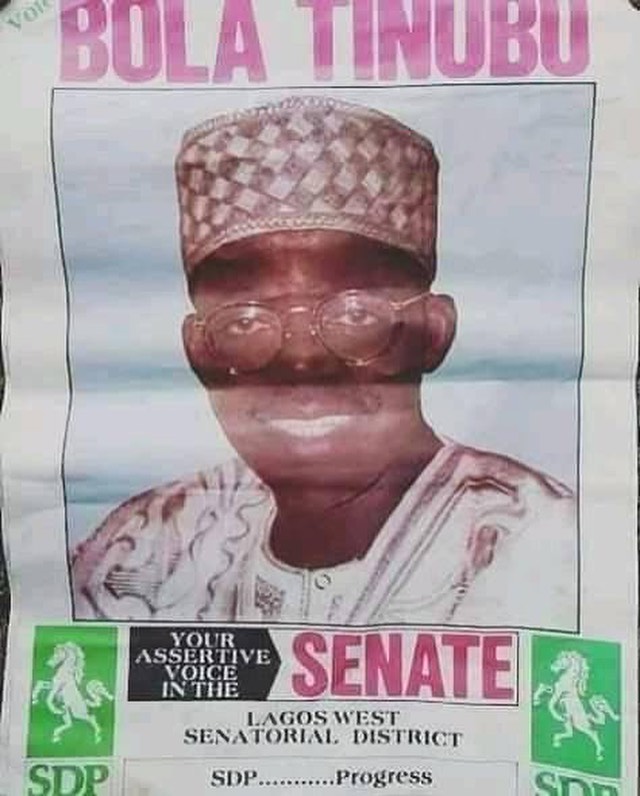
In 1992, Bola Tinubu entered politics. Later, he ran for and was elected to the Federal Republic of Nigeria Senate, serving as the senator for Lagos West. Bola Tinubu and a few other Nigerians created the National Democratic Coalition (NADECO) following the annulment of the June 12, 1993, election. NADECO promoted the restoration of democracy and acknowledged the results of the June 12 election. Bola Tinubu went into exile in 1994 and returned when Sani Abacha passed away in 1998.
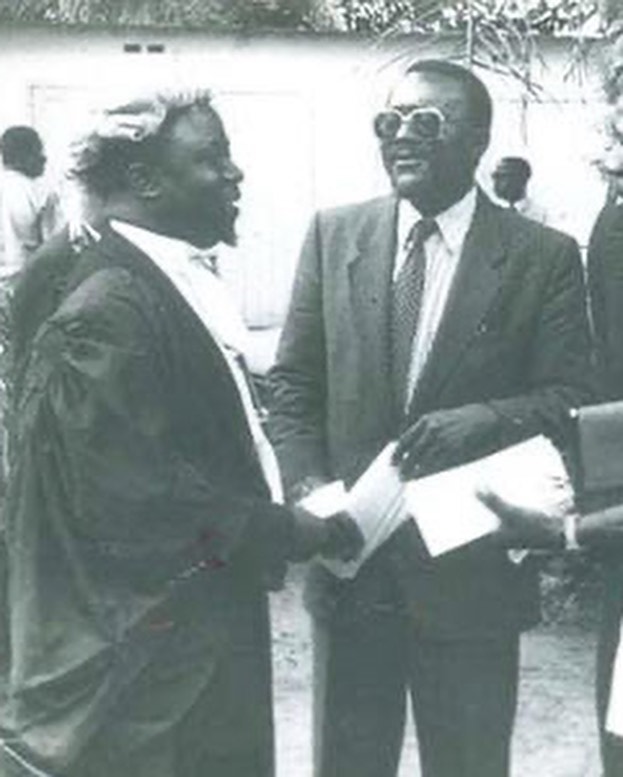
Known by his stage name Olu Onagoruwa, Gabriel Olusoga Onagoruwa, GCON SAN (1936–2017) was a Nigerian jurist and human rights campaigner who held the positions of Attorney-General of the Federation and Minister of Justice during Sani Abacha’s military junta in 1994–1995. Before Abacha severed their brotherly ties, Gani Fawehinmi was very close to Olusoga Onagoruwa. They were like siamese twins for years, best buddies. In actuality, Gani Fawehinmi named Dr. Olu Onagoruwa, a friend of his bossom, as the executor of his first will. Gani represented Dr. Onagoruwa in every case he had, and vice versa. In 1993, General Sani Abacha took over as Head of State. Gani objected to Abacha’s appointment of Onagoruwa as Attorney General and Minister of Justice. He forewarned his pal that he might regret accepting. However, Lt-General Oladipo Diya, Abacha’s deputy and a relative from Odogbolu, convinced Onagoruwa to accept the assignment and ignore Gani. When Onagoruwa did, his friendship with Gani was shattered. After Abacha left, Gani removed him from his position as the administrator of his will, and they stopped communicating until Onagoruwa’s son was killed by Abacha hitmen. He suffered a stroke as a result of the terrible circumstances surrounding his son’s death. Setting aside their disagreements, Gani went to his residence to offer him condolences. Onagoruwa penned a book titled “A Rebel in General Abacha’s Government” following Abacha’s passing. Some passages from his book “General Abacha was not pleased that I was leaving his administration. He thought I was conceited and intrusive. I began to receive news that I was under threat and needed to exercise extreme caution. Above all, I was positive that I had not offended him in any kind. He looked into my account at the Justice Ministry, but he was unable to uncover any evidence against me. Since I was clear before him both personally and officially, what further offenses might he be searching for? My government pals informed me that he had promised them I would experience some agony that I would never forget. He was the government, after all, and I began to say goodbye to my wife at a period of several mysterious deaths, including those of Chief Alfred Rewane, Mrs. Suliat Adedeji, Admiral Olu Omotehinwa, and Admiral Tunde Elegbede. We should keep praying, my wife would reassure me. We had no idea that in 1995, when Oluwatoyin became a trained lawyer, he would turn against us. …
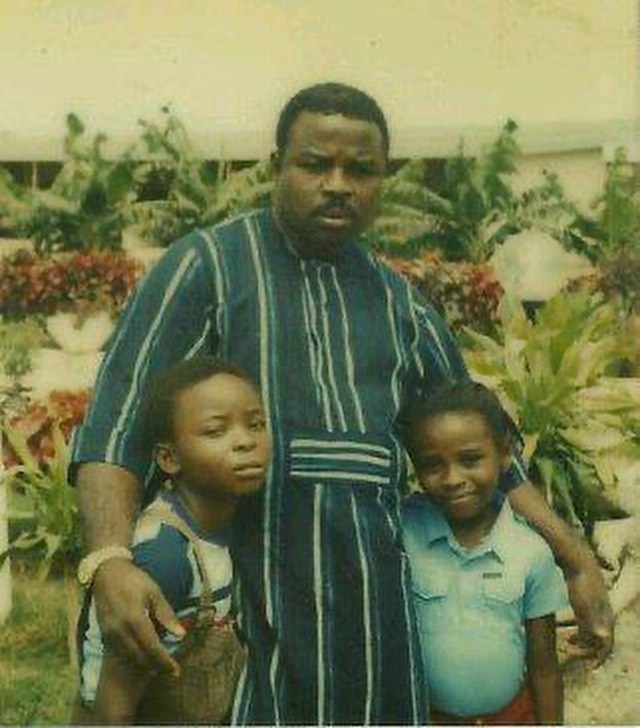
He was a Nigerian general and poet who was a member of the Supreme Military Council as well as the Federal Capital Abuja Minister. He was put to death on March 5, 1986, by General Ibrahim Babangida’s military government, his childhood buddy, after a military trial found him guilty of treason related to an attempted coup. Before he could get the glassware etched with his initials, which was supposed to be a present, he was put to death.
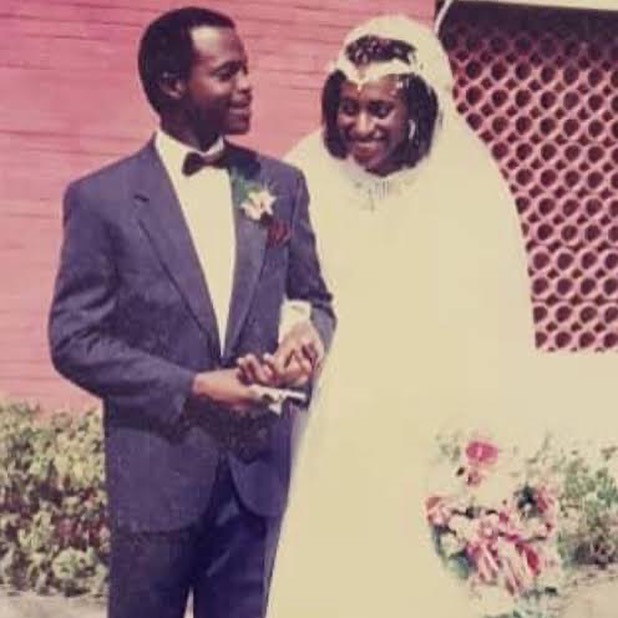
A picture of professor Yemi Osinbajo, the former vice president, and his wife Oludolapo on their 1989 wedding day.
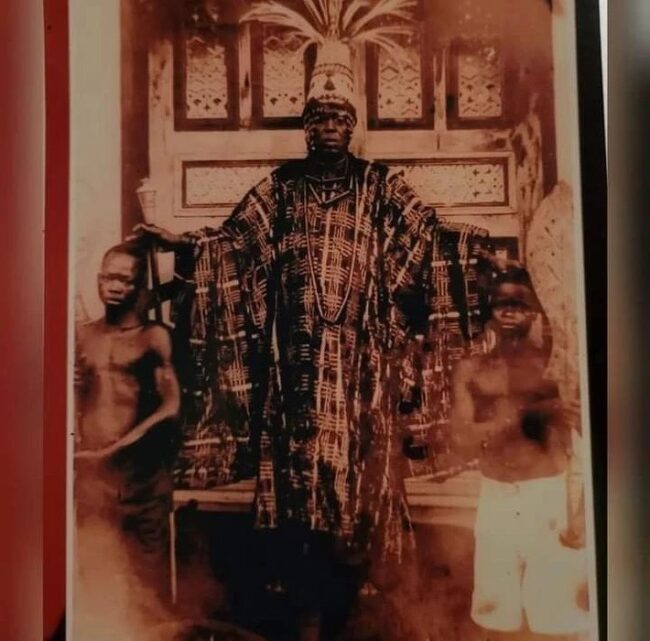
Adesida Oba During her 1956 royal trip of Nigeria, Queen Elizabeth paid a visit to me, one of the kings. The House of Adesida, a branch of the House of Ojijigogun, is the current name given to his lineal descendants. One of Akure’s two officially recognized royal families is the Ojijigoguns. The Asodeboyede dynasty gave me birth in 1832, though it is more likely that I was born in 1856. I was the youngest son of Oba Ojijigogun (1790–1882), the Deji of Akure from 1852–1882, and Olori Adojolomo Lagokun (1810–1890), a wife of the Sashere of Idanre. Among his numerous siblings were Prince Ifaturoti Adegoroye, Alebiosu Aladejana (later Arosoye I), Olokunjuwon, and numerous other older half-brothers. He claimed familial kinship with all the previous rulers of Akure as well as the nearby kingdoms of Ijeshaland and Ikereland through his father. His father was the Benin Empire’s executed son of Oba Arakale. His paternal grandfather, Oba Arakale, was put to death by the Kingdom of Benin in 1818, several decades before he was born. His father’s family was spared by the invaders and continued to reside in Benin until the 1830s. He was the grandchild of Chief Lagokun, the Sashere of Idanre, through his mother. Born Aladegbuji, his father Ojijigogun (Ojijigogun) ruled Akure from 1852 till his passing in 1882.
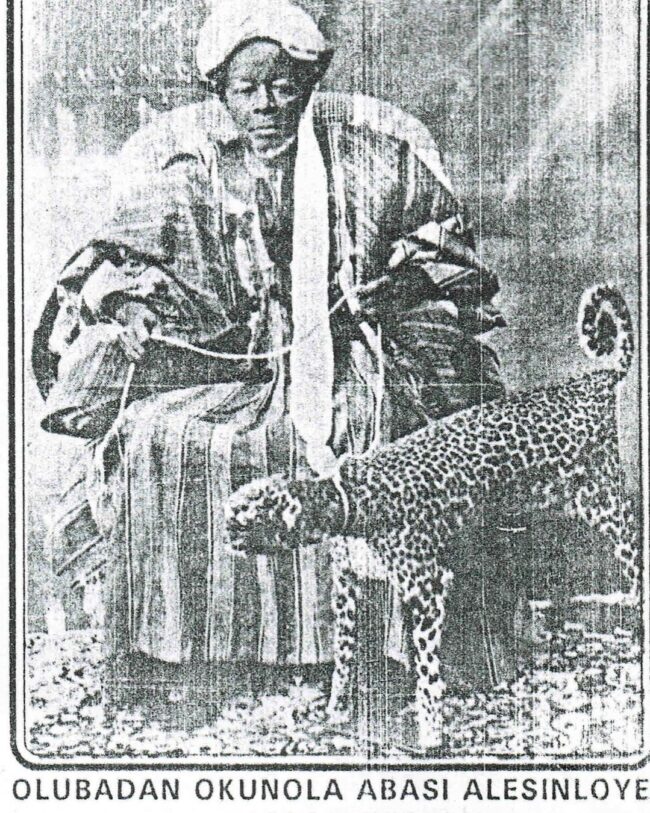
The British government approved Bale’s request for a title change, which was published in the gazette on July 9, 1936. After being BALE since 1930, Oba Aleshinloye became the first Olubadan when the title of BALE OF IBADANLAND was changed to OLUBADAN on July 9, 1936. Up to his passing in 1946, Oba Abass Aleshinloye—also known as Bale Elelubo—ruled as king. The royal title of the monarch of Ibadan territory in Nigeria is called Olubadan, which translates to “Lord of Ibadan.” This position is primarily symbolic today. A war ruler and a black smith established Ibadan in the sixteenth century, according to Oba Isaac Akinyele’s sketch history of the city (LAGELU) During their battles with the Fulanis, an army of the Egba, Ijebu, Ife, and Oyo people captured the town around 1820. In 1829, following a battle between the winners, the Oyo took charge. By 1850, they had developed their unique system of succession, which differs greatly from that of other Yoruba kings in that it alternates between two lines: the Baale line (civic) and the Balogun Isoriki line (military), with both lines sharing power under the supervision of a traditional council. Grooming an Olubadan for the stool through chieftaincy promotion levels takes decades. After concluding contracts with regional authorities like the Olubadan, the Royal Niger Company established itself as the region’s legitimate ruler in 1885 C.E., and the British government formally took control of Nigeria in 1900 as a “Protectorate.” In 1897, the British established the Ibadan Town Council and used the town’s historically influential chiefs to run it. A 1901 law introduced by Governor Sir William MacGregor designated the Baale as the Council’s president, with the Resident serving only as an advisor as needed. (Until 1936, when Olubadan was revived, the Ibadan rulers were commonly referred to as Baale).